


Psychedelics, Cannabis and Cancer Biology
This page gathers the research on whether psychedelic compounds and cannabis have direct effects on cancer itself: in cells, in animals, and in the few studies in people. For research on mood, anxiety and quality of life in people living with cancer, see Cancer Related Distress.
Cancer
Cancer research: psychedelics
Survey of people (2021).
Among 171,766 U.S. adults, lifetime classic psychedelic use went with lower odds of a heart condition and/or cancer in the past 12 months.
Researchers used the 2015 to 2018 National Survey on Drug Use and Health to look at three markers of physical health: overall health, body weight, and having a heart condition and/or cancer.
“…lower odds of having a heart condition and/or cancer in the past 12 months…”
Simonsson O, Sexton JD, Hendricks PS. Associations between lifetime classic psychedelic use and markers of physical health. J Psychopharmacol. 2021;35(4):447-452. https://doi.org/10.1177/0269881121996863
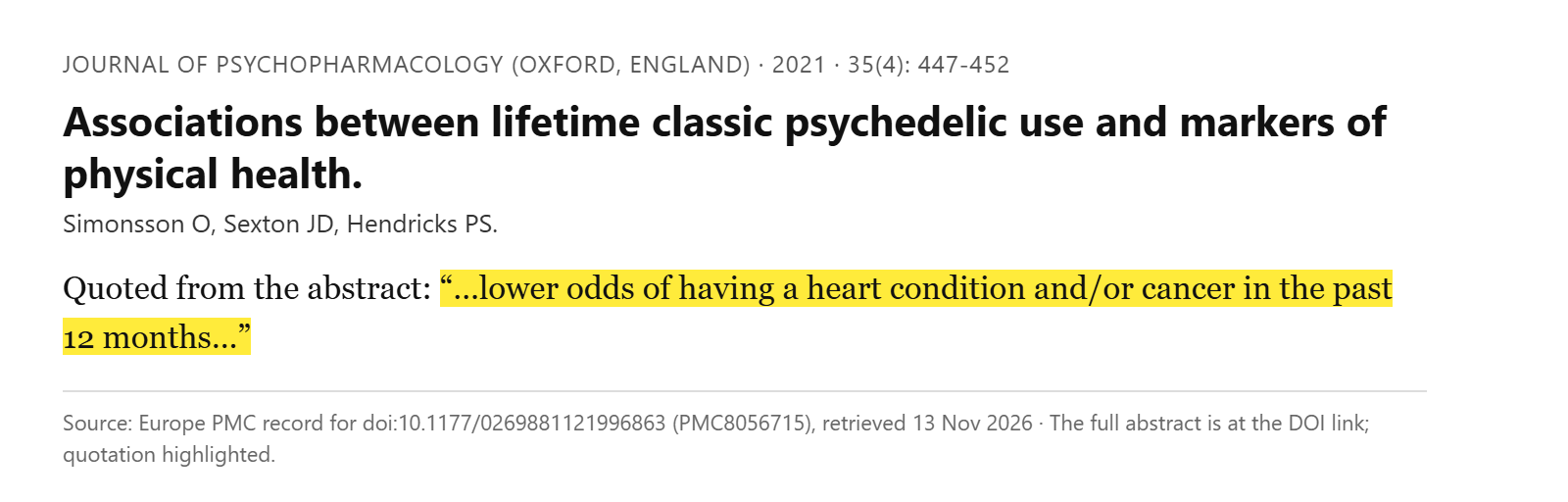
Quotation from the abstract of the published study (text from Europe PMC), highlighted in yellow. The authors report that this association came close to statistical significance. Source: Simonsson O, Sexton JD, Hendricks PS. Associations between lifetime classic psychedelic use and markers of physical health. J Psychopharmacol. 2021;35(4):447-452. https://doi.org/10.1177/0269881121996863
Cells and animals (mice), 2026.
LSD suppressed colorectal cancer growth in mice by boosting immune T cells, and a version that does not enter the brain made PD-1 immunotherapy work better!
In a 2026 study in the journal Cell, researchers reported that LSD, by targeting the serotonin receptor 5-HT2AR, enhances CD8+ T cell-mediated antitumor immunity (CD8+ T cells are immune cells that can attack tumors). The team then developed IHCH-8110, a compound that acts on the same receptor but does not enter the brain, and reported that it enhanced the efficacy of a type of immunotherapy (PD-1 blockade)!
“Here, we show that by targeting the serotonin receptor 5-HT2AR, lysergic acid diethylamide (LSD) enhances CD8+ T cell-mediated antitumor immunity and suppresses colorectal cancer (CRC) growth.”
Wen Y, Tang L, Duan W, et al. Targeting peripheral 5-HT2AR enhances antitumor immunity in colorectal cancer. Cell. 2026;189(18):5688-5705.e13. https://doi.org/10.1016/j.cell.2026.07.028
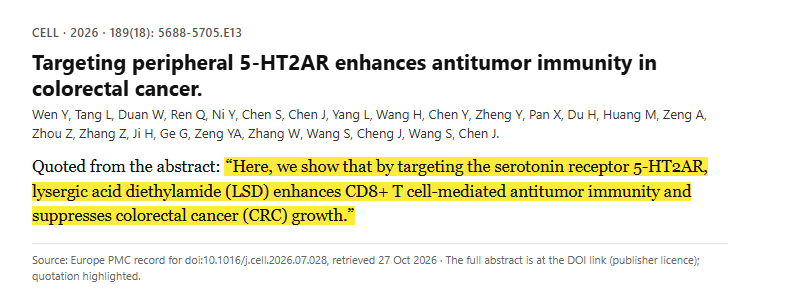
Quotation from the abstract of the published study (text from Europe PMC), highlighted in yellow. Source: Wen Y, Tang L, Duan W, et al. Targeting peripheral 5-HT2AR enhances antitumor immunity in colorectal cancer. Cell. 2026;189(18):5688-5705.e13. https://doi.org/10.1016/j.cell.2026.07.028
Animals (mice), 2026: a chemotherapy side effect.
Just two doses of psilocybin before chemotherapy prevented nerve damage in mouse models, without impairing the chemotherapy’s antitumor effect!
A 2026 study in Science looked at nerve damage caused by chemotherapy (chemotherapy-induced peripheral neuropathy, or CIPN). The researchers reported that as little as two doses of psilocybin before chemotherapy durably prevented the onset of this nerve damage in their models, “without impairing antitumor efficacy”, meaning the chemotherapy still worked against the tumors! Nature’s news report on the study was headlined “Magic-mushroom compound blocks a severe side effect of chemotherapy in mice”. This is a finding about a side effect, in mice.
“This stabilization of peripheral axonal energy balance establishes psilocybin as a first-in-class prophylactic agent for CIPN while also preserving central neural function.”
Heles M, Pasvolsky L, Sathishkumar H, et al. Psilocybin prevents chemotherapy-induced peripheral neuropathy through mitochondrial trafficking preservation. Science. 2026;393(6815):eaec6116. https://doi.org/10.1126/science.aec6116
Kozlov M. Magic-mushroom compound blocks a severe side effect of chemotherapy in mice. Nature. Published online September 3, 2026. https://doi.org/10.1038/d41586-026-02744-6
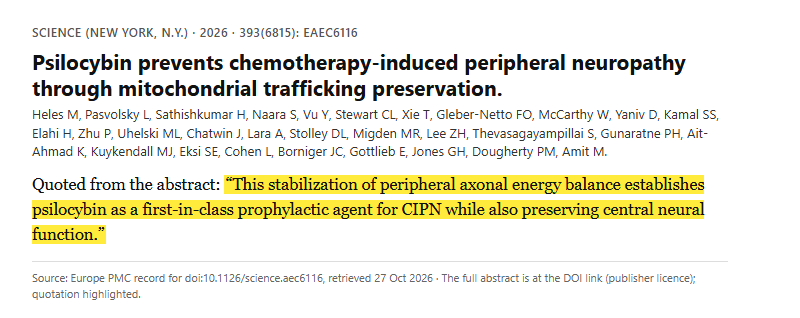
Quotation from the abstract of the published study (text from Europe PMC), highlighted in yellow. Source: Heles M, Pasvolsky L, Sathishkumar H, et al. Psilocybin prevents chemotherapy-induced peripheral neuropathy through mitochondrial trafficking preservation. Science. 2026;393(6815):eaec6116. https://doi.org/10.1126/science.aec6116
Cells, 2013.
DMT and tryptamine increased the cytotoxic activity of immune cells against human glioma cells in the dish!
A 2013 laboratory study tested DMT and tryptamine on IDO, an enzyme that helps tumors escape the immune system, using human glioma (brain tumor) cells and immune cells from blood. The researchers reported that DMT and tryptamine inhibited IDO, and they concluded that this contributed to a more effective tumor-reactive response by the immune cells in the dish! This was laboratory work in dishes.
“TRY and DMT increased the cytotoxic activity of peripheral blood mononuclear cells (PBMCs) in co-culture assays.”
Tourino MC, de Oliveira EM, Bellé LP, et al. Tryptamine and dimethyltryptamine inhibit indoleamine 2,3 dioxygenase and increase the tumor-reactive effect of peripheral blood mononuclear cells. Cell Biochem Funct. 2013;31(5):361-364. https://doi.org/10.1002/cbf.2980
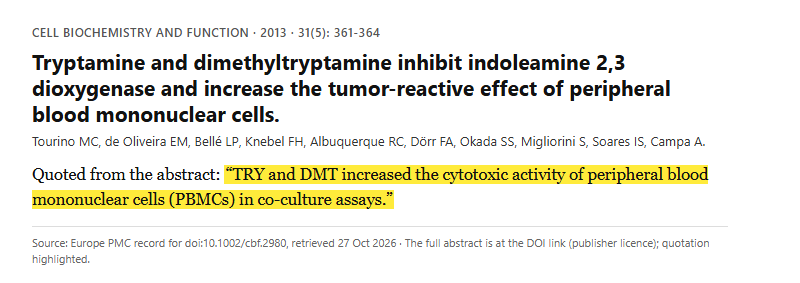
Quotation from the abstract of the published study (text from Europe PMC), highlighted in yellow. Source: Tourino MC, de Oliveira EM, Bellé LP, et al. Tryptamine and dimethyltryptamine inhibit indoleamine 2,3 dioxygenase and increase the tumor-reactive effect of peripheral blood mononuclear cells. Cell Biochem Funct. 2013;31(5):361-364. https://doi.org/10.1002/cbf.2980
Review, 2016.
Human studies found that ayahuasca altered the number and distribution of blood immune cells in a way that can increase antiviral and anti-tumor immunity!
Preclinical work has examined possible anti-tumour activity in ayahuasca’s constituents. None of it has been tested as a cancer treatment in people. Frecska and colleagues point to human studies in which ayahuasca changed the numbers of some immune cells in the blood, such as natural killer cells, and they suggest this might support immunity against viruses and tumors!
“The possible anti-cancer activity of the decoction makes it a promising candidate for further researches in novel pharmacotherapies (Schenberg, 2013).”
Frecska E, Bokor P, Winkelman M. The therapeutic potentials of ayahuasca: possible effects against various diseases of civilization. Front Pharmacol. 2016;7:35. https://doi.org/10.3389/fphar.2016.00035
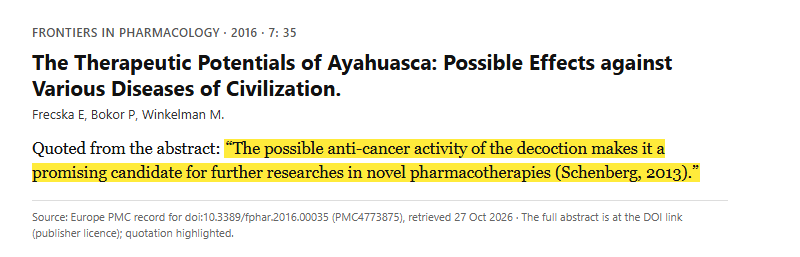
Excerpt of the published study (text from Europe PMC), key sentence highlighted in yellow. Source: Frecska E, Bokor P, Winkelman M. The therapeutic potentials of ayahuasca: possible effects against various diseases of civilization. Front Pharmacol. 2016;7:35. https://doi.org/10.3389/fphar.2016.00035
Review, 2015.
Circulating natural killer (NK) cells, immune cells involved in anti-viral and anti-cancer responses, increased significantly in human studies of ayahuasca, according to this review of psychedelics and the immune system!
A review of psychedelics and the immune system describes classic psychedelics changing immune responses “by altering signaling pathways involved in inflammation, cellular proliferation, and cell survival”, and names cancer among the diseases where this emerging field is being explored. It also reports that in human studies of ayahuasca the number of circulating NK cells increased significantly!
“Notably, the number of circulating NK cells, a cell type involved in anti-viral and anti-cancer immune responses, increased significantly (105, 106).”
Szabo A. Psychedelics and immunomodulation: novel approaches and therapeutic opportunities. Front Immunol. 2015;6:358. https://doi.org/10.3389/fimmu.2015.00358
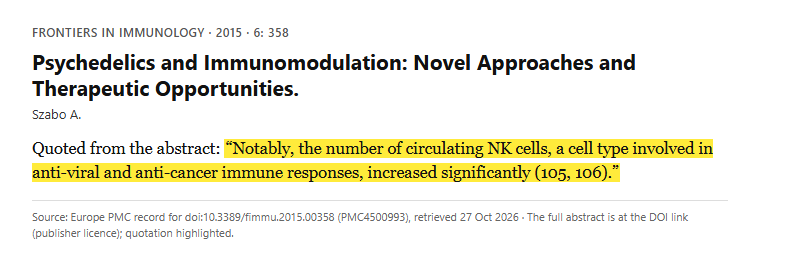
Excerpt of the published study (text from Europe PMC), key sentence highlighted in yellow. Source: Szabo A. Psychedelics and immunomodulation: novel approaches and therapeutic opportunities. Front Immunol. 2015;6:358. https://doi.org/10.3389/fimmu.2015.00358
Review, 2015.
Sigma receptors are over-expressed in tumors, and their ligands induce significant cell death only in tumor tissue!
DMT has also been linked with sigma receptors, proteins found in high amounts in many tumors. A 2015 review notes that the body’s own binders for these receptors “may include the hallucinogen N,N-dimethyltryptamine (DMT)”, and that drugs acting on sigma receptors can cause cell death in tumor tissue. Finally, the review describes tracers that show sigma receptors on PET scans, and tiny particles that use sigma receptors to carry cancer drugs, which at the time had been tried only in animals.
“Although sigma receptors are over-expressed in tumors and up-regulated in rapidly dividing normal tissue, their ligands induce significant cell death only in tumor tissue.”
van Waarde A, Rybczynska AA, Ramakrishnan NK, Ishiwata K, Elsinga PH, Dierckx RA. Potential applications for sigma receptor ligands in cancer diagnosis and therapy. Biochim Biophys Acta. 2015;1848(10 Pt B):2703-2714. https://doi.org/10.1016/j.bbamem.2014.08.022
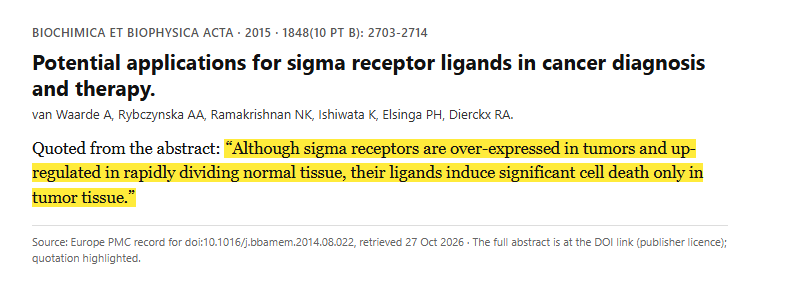
Quotation from the abstract of the published study (text from Europe PMC), highlighted in yellow. Source: van Waarde A, Rybczynska AA, Ramakrishnan NK, Ishiwata K, Elsinga PH, Dierckx RA. Potential applications for sigma receptor ligands in cancer diagnosis and therapy. Biochim Biophys Acta. 2015;1848(10 Pt B):2703-2714. https://doi.org/10.1016/j.bbamem.2014.08.022
Case reports, gathered in a review (2013).
At least nine case reports of people using ayahuasca with different cancers, and several were considered improvements!
A 2013 review by Eduardo Schenberg, shown below, found at least nine case reports of people using ayahuasca with prostate, brain, ovarian, uterine, stomach, breast and colon cancers, and several of these were considered improvements. He presented a theoretical model for these effects at the cellular, molecular and psychosocial levels, and called for research into the safety and efficacy of ayahuasca!
“The proposed model, based on the molecular and cellular biology of ayahuasca's known active components and the available clinical reports, suggests that these accounts may have consistent biological underpinnings.”
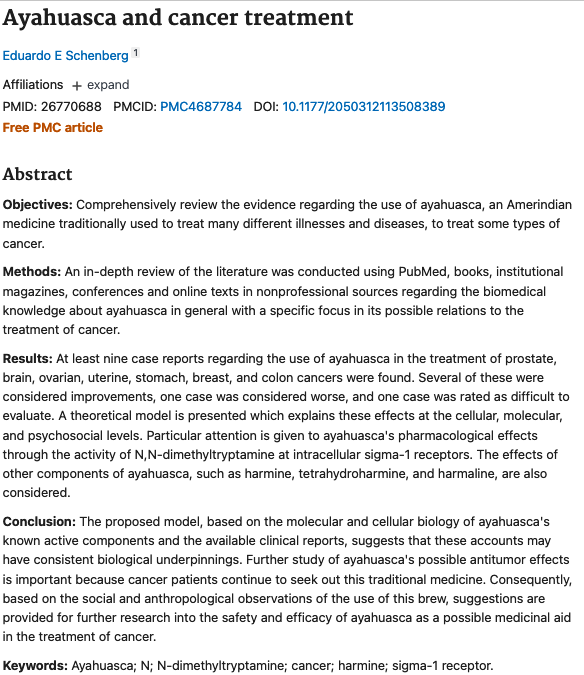
Schenberg EE. Ayahuasca and cancer treatment. SAGE Open Med. 2013;1:2050312113508389. https://doi.org/10.1177/2050312113508389 · Screenshot of the published record (PubMed).
More cancer research: other psychedelic compounds
Review of cells and animals (2024): harmine, an alkaloid of the ayahuasca vine.
Across many laboratory studies, harmine slowed tumour growth in breast, pancreatic, brain and stomach cancer models!
Harmine is one of the β-carboline alkaloids found in the ayahuasca vine and in Syrian rue (Peganum harmala). A 2024 review in Frontiers in Oncology gathered the cell and animal studies and reported that harmine can hold back the growth and spread of cancer cells, trigger apoptosis (programmed cell death) and limit the new blood vessels that feed a tumour. The reviewers also noted that it reduced drug resistance when combined with chemotherapy drugs. They are equally clear about its limits: harmine dissolves poorly and has toxic side effects, particularly on the nervous system, which is why chemists are now designing safer versions of the molecule. These are laboratory and animal findings, not trials in people.
Source: Hu Y, Yu X, Yang L, Xue G, Wei Q, Han Z, Chen H. Research progress on the antitumor effects of harmine. Front Oncol. 2024;14:1382142. https://doi.org/10.3389/fonc.2024.1382142
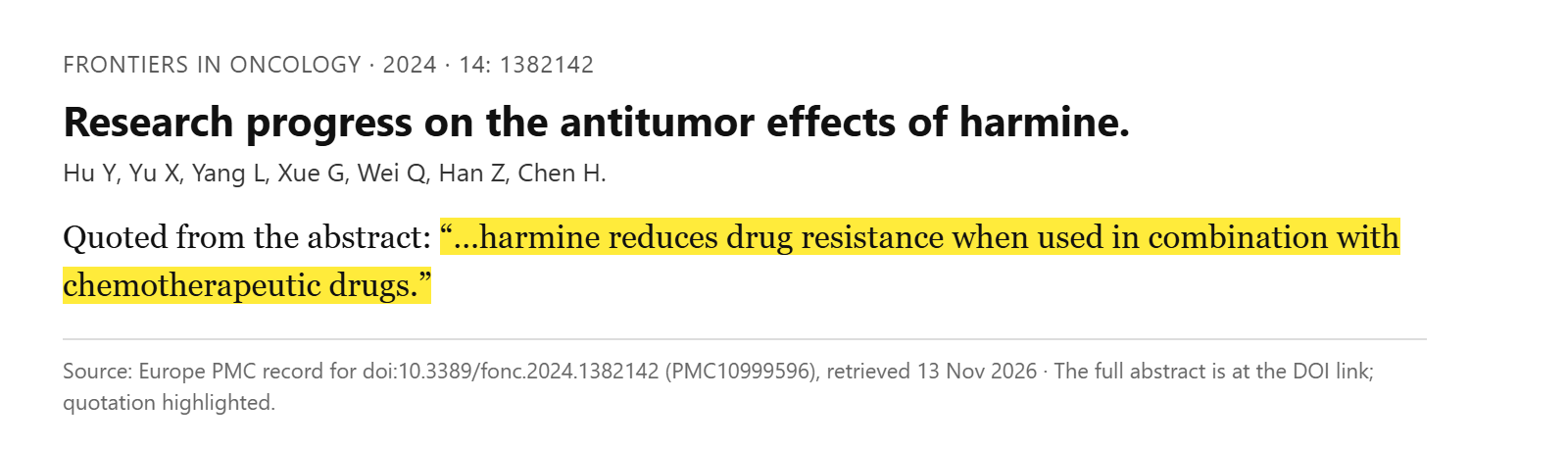
Quotation from the abstract of the published review (text from Europe PMC), highlighted in yellow. Source: Hu Y, Yu X, Yang L, et al. Research progress on the antitumor effects of harmine. Front Oncol. 2024;14:1382142. https://doi.org/10.3389/fonc.2024.1382142
Cells and animals (mice), 2021: harmine and glioblastoma.
Harmine slowed the growth of glioblastoma, one of the hardest brain cancers to treat, in cells and in mice!
In a 2021 study in Life Sciences, researchers treated two human glioblastoma cell lines with harmine and reported that it suppressed their multiplication in a dose- and time-dependent way and reduced their ability to migrate, by quieting a growth pathway called FAK/Akt. In mice carrying human glioblastoma grafts, harmine treatment inhibited tumour growth.
Source: Zhu YG, Lv YX, Guo CY, Xiao ZM, Jiang QG, Kuang H, Zhang WH, Hu P. Harmine inhibits the proliferation and migration of glioblastoma cells via the FAK/AKT pathway. Life Sci. 2021;270:119112. https://doi.org/10.1016/j.lfs.2021.119112
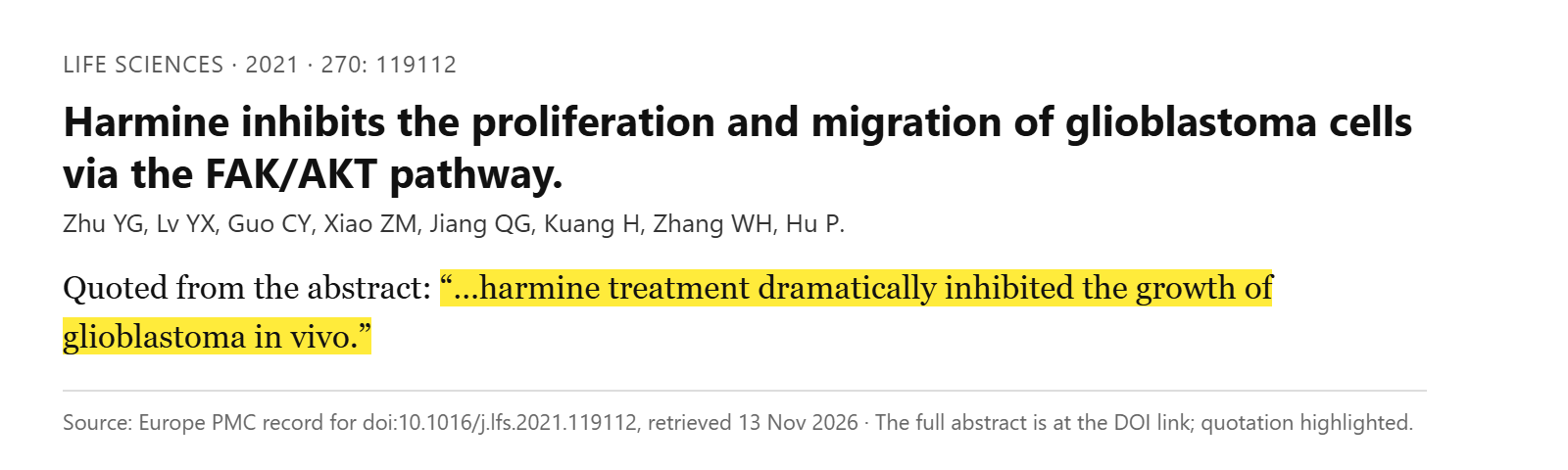
Quotation from the abstract of the published study (text from Europe PMC), highlighted in yellow. Source: Zhu YG, Lv YX, Guo CY, et al. Harmine inhibits the proliferation and migration of glioblastoma cells via the FAK/AKT pathway. Life Sci. 2021;270:119112. https://doi.org/10.1016/j.lfs.2021.119112
Cells, 2019: harmine and pancreatic cancer.
Harmine slowed four lines of pancreatic cancer cells and made the standard chemotherapy drug work better against them in the laboratory!
Pancreatic cancer responds poorly to chemotherapy, largely because the cells become resistant to it. In a 2019 study in OncoTargets and Therapy, researchers reported that harmine suppressed the growth of four pancreatic cancer cell lines in a dose- and time-dependent way, and that harmine together with gemcitabine, the first-line chemotherapy drug, showed strong synergy: the pair held back the cells more than either did alone, and harmine increased the cell death that gemcitabine triggered. This was work in cell lines only, not in animals or people.
Source: Wu LW, Zhang JK, Rao M, Zhang ZY, Zhu HJ, Zhang C. Harmine suppresses the proliferation of pancreatic cancer cells and sensitizes pancreatic cancer to gemcitabine treatment. Onco Targets Ther. 2019;12:4585-4593. https://doi.org/10.2147/OTT.S205097
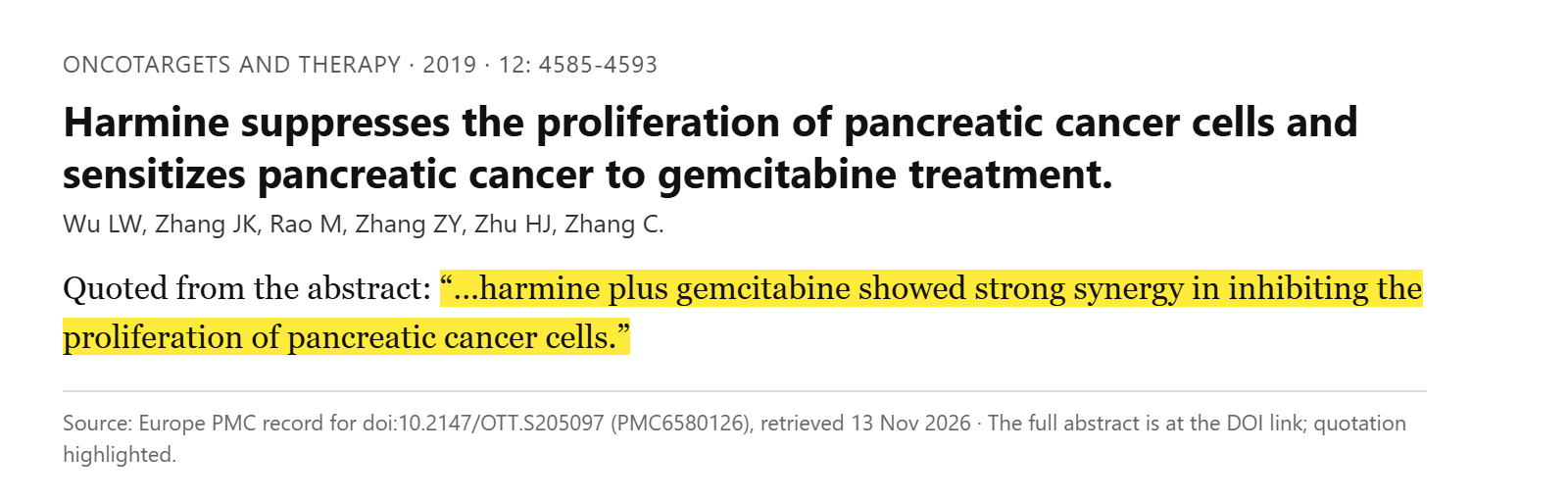
Quotation from the abstract of the published study (text from Europe PMC), highlighted in yellow. Source: Wu LW, Zhang JK, Rao M, et al. Harmine suppresses the proliferation of pancreatic cancer cells and sensitizes pancreatic cancer to gemcitabine treatment. Onco Targets Ther. 2019;12:4585-4593. https://doi.org/10.2147/OTT.S205097
Cells, 2012: MDMA redesigned.
Chemists reshaped the MDMA molecule into compounds ten times more potent against lymphoma cells in the laboratory!
Researchers at the University of Birmingham, working with chemists at the University of Western Australia, started from an earlier finding that MDMA slows the growth of lymphoma cells in the dish, but only at concentrations far too high to give a person. By changing one part of the molecule they produced analogues that were about 10-fold more potent against Burkitt’s lymphoma cells, and that acted across a broad range of B-cell cancers. The compounds still worked in cells carrying high levels of Bcl-2, a protein that often shields lymphoma from treatment. This was work in cell lines only. MDMA itself is not a cancer treatment, and the redesigned compounds had not been tested in people.
Source: Wasik AM, Gandy MN, McIldowie M, Holder MJ, Chamba A, Challa A, Lewis KD, Young SP, Scheel-Toellner D, Dyer MJ, Barnes NM, Piggott MJ, Gordon J. Enhancing the anti-lymphoma potential of 3,4-methylenedioxymethamphetamine (‘ecstasy’) through iterative chemical redesign: mechanisms and pathways to cell death. Invest New Drugs. 2012;30(4):1471-1483. https://doi.org/10.1007/s10637-011-9730-5
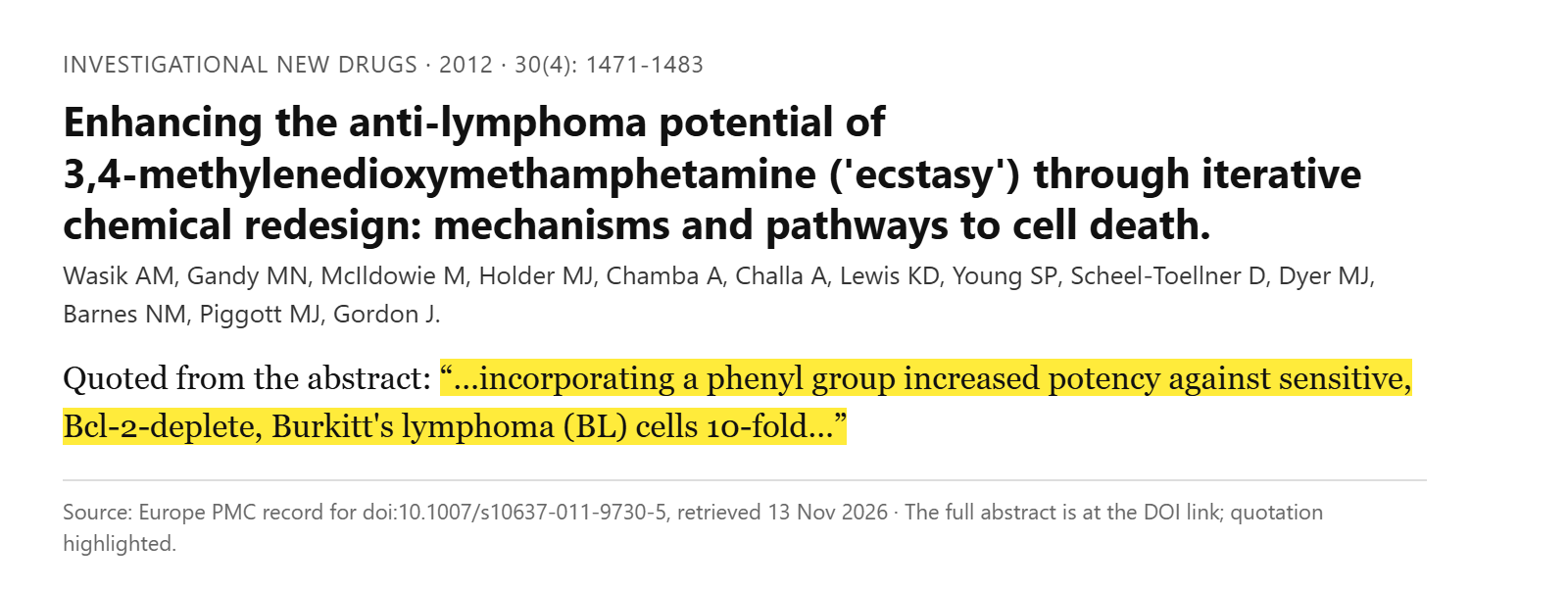
Quotation from the abstract of the published study (text from Europe PMC), highlighted in yellow. Source: Wasik AM, Gandy MN, McIldowie M, et al. Enhancing the anti-lymphoma potential of 3,4-methylenedioxymethamphetamine (‘ecstasy’) through iterative chemical redesign: mechanisms and pathways to cell death. Invest New Drugs. 2012;30(4):1471-1483. https://doi.org/10.1007/s10637-011-9730-5
Cells and animals, 2021: ketamine.
Ketamine suppressed the growth of liver cancer cells, in the dish and in animals!
In a 2021 study in Drug Design, Development and Therapy, researchers reported that ketamine significantly reduced the survival and multiplication of liver cancer cells both in vitro and in vivo. They traced the effect to ferroptosis, an iron-dependent form of cell death, working through a chain of molecules named PVT1, miR-214-3p and GPX4. This was laboratory and animal research, not a trial in people.
Source: He GN, Bao NR, Wang S, Xi M, Zhang TH, Chen FS. Ketamine induces ferroptosis of liver cancer cells by targeting lncRNA PVT1/miR-214-3p/GPX4. Drug Des Devel Ther. 2021;15:3965-3978. https://doi.org/10.2147/DDDT.S332847
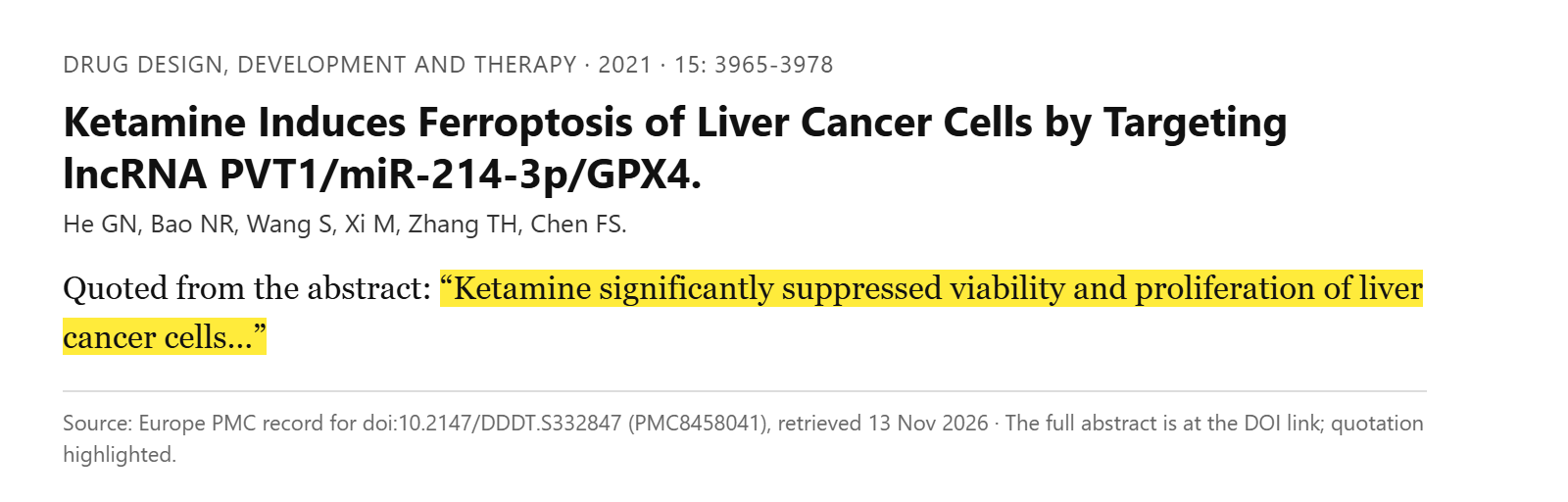
Quotation from the abstract of the published study (text from Europe PMC), highlighted in yellow. Source: He GN, Bao NR, Wang S, et al. Ketamine induces ferroptosis of liver cancer cells by targeting lncRNA PVT1/miR-214-3p/GPX4. Drug Des Devel Ther. 2021;15:3965-3978. https://doi.org/10.2147/DDDT.S332847
Review (2024): ketamine around cancer surgery.
Could the anaesthetic chosen for cancer surgery affect whether the cancer returns? Ketamine is being studied for exactly that.
A 2024 review in the Journal of Clinical Medicine gathered the evidence on ketamine and esketamine around the time of tumour surgery: their effects on cancer cells, on inflammation and on the immune system. The authors point to the NMDA receptor, which ketamine blocks and which is found in various cancer tissues, and they propose ketamine as a promising agent for improving outcomes after surgery.
Sources: Rodriguez Arango JA, Zec T, Khalife M. Perioperative ketamine and cancer recurrence: a comprehensive review. J Clin Med. 2024;13(7):1920. https://www.mdpi.com/2077-0383/13/7/1920 · Effects of anesthesia on postoperative recurrence and metastasis of malignant tumors. Cancer Manag Res. 2020;12:7619-7633. https://doi.org/10.2147/CMAR.S265529
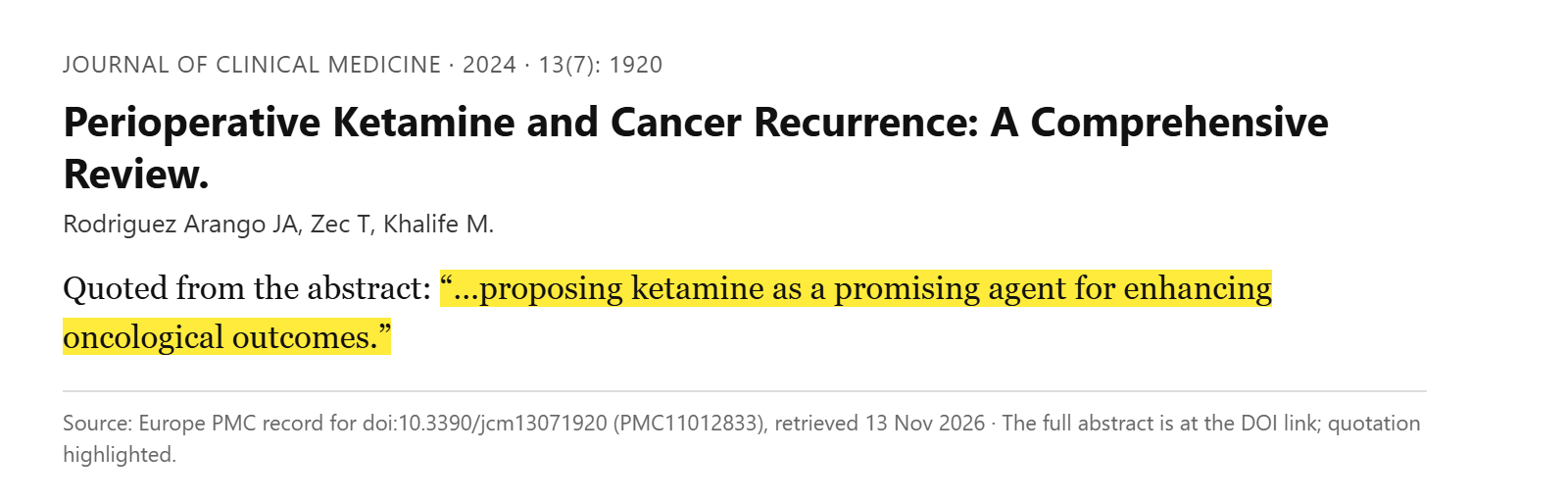
Quotation from the abstract of the published review (text from Europe PMC), highlighted in yellow. Source: Rodriguez Arango JA, Zec T, Khalife M. Perioperative ketamine and cancer recurrence: a comprehensive review. J Clin Med. 2024;13(7):1920. https://doi.org/10.3390/jcm13071920
Randomized trial in people (2023): esketamine during breast cancer surgery.
In 136 women having breast cancer surgery, esketamine eased the inflammatory response and shifted immune measures in a randomized trial!
Researchers randomly assigned 136 patients having a modified radical mastectomy to a control group or to one of several doses of S-ketamine (esketamine). They reported that S-ketamine reduced the inflammatory response to surgery and modulated the immune response, with the clearest differences at the higher doses of 0.5 and 0.75 mg/kg. Natural killer cell and B cell counts did not differ between groups. The trial measured blood markers around the time of surgery; it did not measure whether cancer returned.
Source: Zhang J, Ma Q, Li W, Li X, Chen X. S-Ketamine attenuates inflammatory effect and modulates the immune response in patients undergoing modified radical mastectomy: a prospective randomized controlled trial. Front Pharmacol. 2023. https://doi.org/10.3389/fphar.2023.1128924
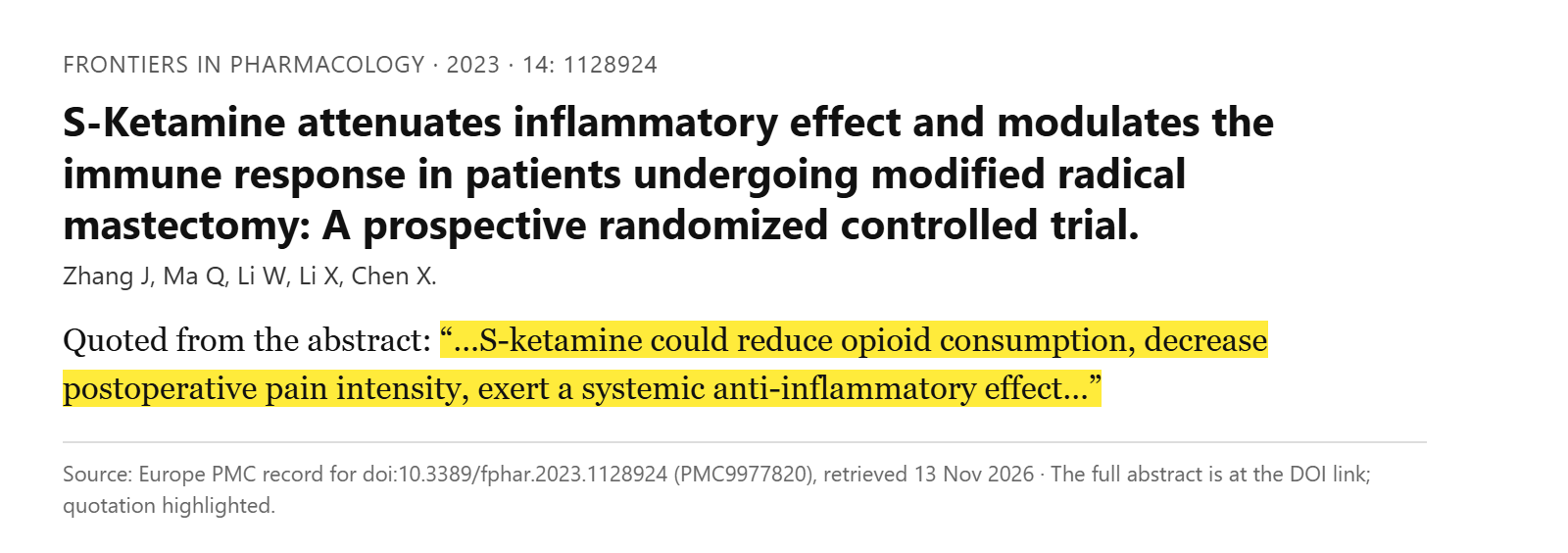
Quotation from the abstract of the published study (text from Europe PMC), highlighted in yellow. Source: Zhang J, Ma Q, Li W, et al. S-Ketamine attenuates inflammatory effect and modulates the immune response in patients undergoing modified radical mastectomy: a prospective randomized controlled trial. Front Pharmacol. 2023;14:1128924. https://doi.org/10.3389/fphar.2023.1128924
Review of patient records (2021): ketamine during lung cancer surgery.
Among people who had surgery for early-stage lung cancer, those given ketamine during the operation were less likely to have the cancer return!
Researchers looked back at the records of 740 people who had surgery for early-stage lung adenocarcinoma and compared what they were given for pain during the operation. After adjusting for other factors, ketamine was associated with better recurrence-specific survival (hazard ratio 0.44, meaning roughly half the rate of recurrence, with a 95% confidence interval of 0.24 to 0.80), while higher opioid doses were associated with worse overall survival.
Sources: Connolly JG, Tan KS, Mastrogiacomo B, et al. Intraoperative opioid exposure, tumour genomic alterations, and survival differences in people with lung adenocarcinoma. Br J Anaesth. 2021;127(1):75-84. https://pmc.ncbi.nlm.nih.gov/articles/PMC8258974 · Forget P, Vandenhende J, Berliere M, Machiels JP, Nussbaum B, Legrand C, De Kock M. Do intraoperative analgesics influence breast cancer recurrence after mastectomy? A retrospective analysis. Anesth Analg. 2010;110(6):1630-1635. https://doi.org/10.1213/ANE.0b013e3181d2ad07
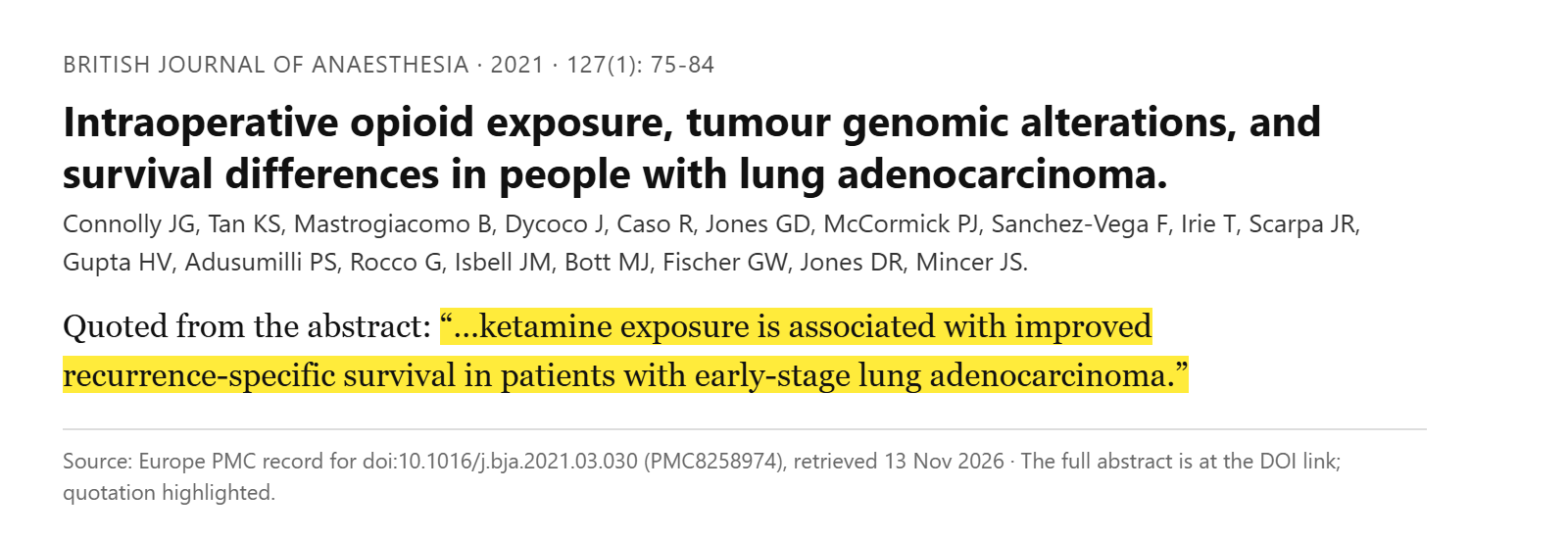
Quotation from the abstract of the published study (text from Europe PMC), highlighted in yellow. Source: Connolly JG, Tan KS, Mastrogiacomo B, et al. Intraoperative opioid exposure, tumour genomic alterations, and survival differences in people with lung adenocarcinoma. Br J Anaesth. 2021;127(1):75-84. https://doi.org/10.1016/j.bja.2021.03.030
Cells and animals (mice), 2023: a serotonin-acting tryptamine and immunotherapy.
A tryptamine that acts on serotonin receptors helped immune T cells find melanoma tumours in mice, and improved on immunotherapy alone!
This compound, 5-nonyloxytryptamine, is a chemical relative of the tryptamine psychedelics that acts on serotonin receptors; it is not itself a psychedelic, and it is included here because it points to the same biology. In a 2023 study in Molecular Cancer, researchers reported that it delayed tumour growth in mice, that the effect depended on the animals’ own immune system and specifically on CD8+ T cells, and that it worked by making tumour cells more visible to those T cells. Combined with anti-PD-1 immunotherapy, it gave a significant improvement over the immunotherapy alone.
Source: Stachura P, Liu W, Xu HC, et al. Unleashing T cell anti-tumor immunity: new potential for 5-Nonloxytryptamine as an agent mediating MHC-I upregulation in tumors. Mol Cancer. 2023;22(1):136. https://doi.org/10.1186/s12943-023-01833-8
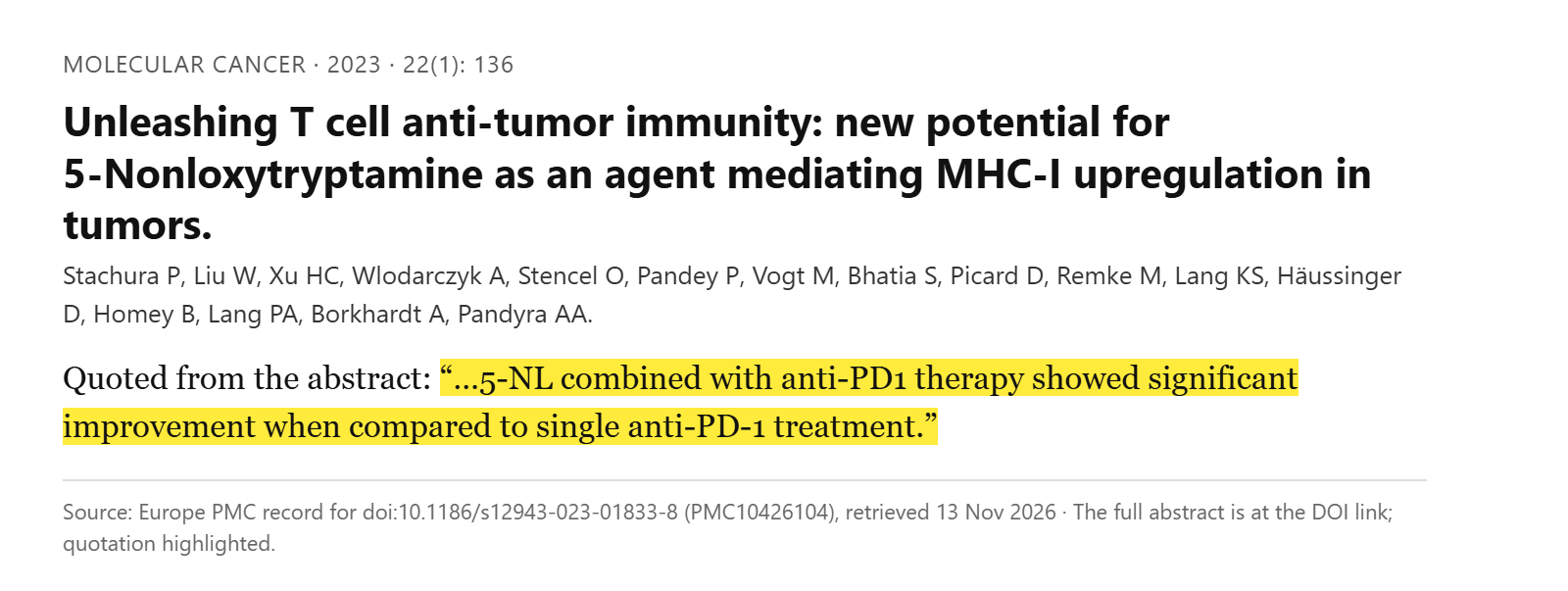
Quotation from the abstract of the published study (text from Europe PMC), highlighted in yellow. In the quotation, 5-NL is 5-nonyloxytryptamine, the compound tested. Source: Stachura P, Liu W, Xu HC, et al. Unleashing T cell anti-tumor immunity: new potential for 5-Nonloxytryptamine as an agent mediating MHC-I upregulation in tumors. Mol Cancer. 2023;22(1):136. https://doi.org/10.1186/s12943-023-01833-8
Cells, 2024: brews made from ayahuasca plants and colorectal cancer cells.
Brews made from ayahuasca plants triggered cell death in human colorectal cancer cells in the laboratory!
Researchers at the University of Beira Interior in Portugal brewed decoctions from plants used to make ayahuasca and its analogues (Psychotria viridis, Banisteriopsis caapi, Mimosa hostilis and Syrian rue, Peganum harmala) and applied them to Caco-2 cells, a line of human colorectal adenocarcinoma cells. Every brew reduced the cells’ survival at a high enough concentration. The three studied most closely, Mimosa hostilis, Syrian rue and the two together, switched on caspase-3, an enzyme that carries out programmed cell death, and lowered Ki-67, a marker of cell multiplication.
Source: Gonçalves J, Feijó M, Socorro S, Luís Â, Gallardo E, Duarte AP. The role of ayahuasca in colorectal adenocarcinoma cell survival, proliferation and oxidative stress. Pharmaceuticals (Basel). 2024;17(6):719. https://doi.org/10.3390/ph17060719
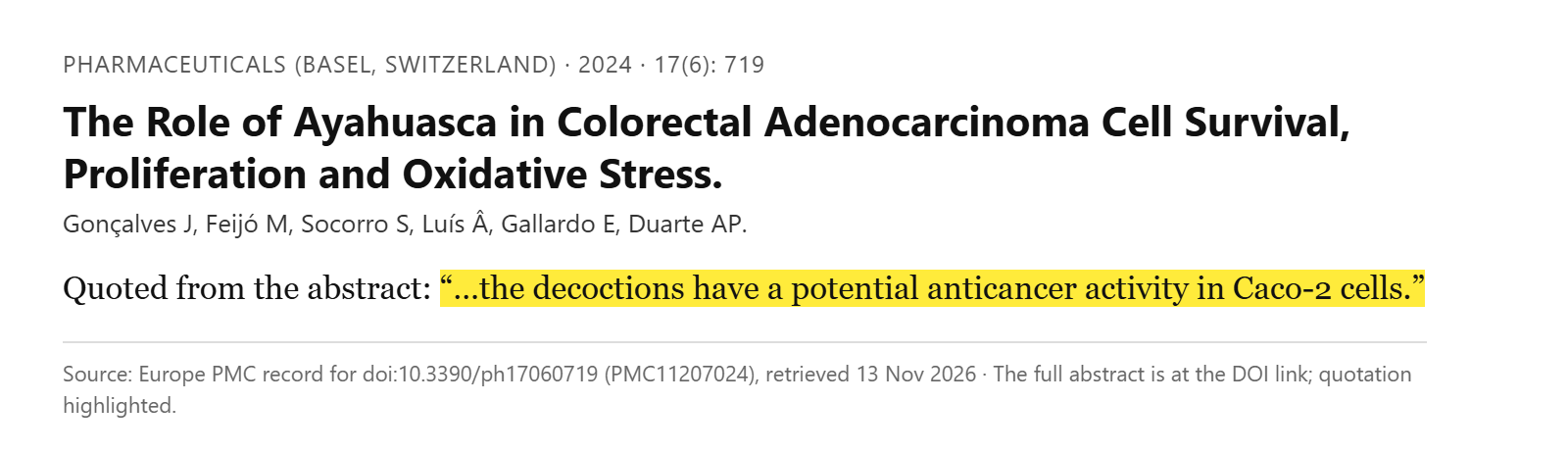
Quotation from the abstract of the published study (text from Europe PMC), highlighted in yellow. Source: Gonçalves J, Feijó M, Socorro S, et al. The role of ayahuasca in colorectal adenocarcinoma cell survival, proliferation and oxidative stress. Pharmaceuticals (Basel). 2024;17(6):719. https://doi.org/10.3390/ph17060719
Cells, 2003 and 2021: peyote extract.
An extract of peyote, the mescaline cactus, stimulated immune cells and was toxic to tumour cells in the dish!
In 2003 researchers tested a methanol extract of peyote (Lophophora williamsii) on immune cells and tumour cells in the laboratory. The extract increased nitric oxide production by mouse macrophages, a sign that these immune cells had been activated, more than doubled the multiplication of mouse lymphocytes, and raised the signals for three immune messengers (IL-1, IL-6 and IL-8) in human white blood cells. At the highest concentration it was also toxic to four tumour cell lines, leaving about 1% of human breast cancer cells and 8% of mouse lymphoma cells alive. In 2021 the same group reported that peyote extract reduced the survival of rodent glioma cells and triggered apoptosis, and called for animal experiments to find out whether the extract has any antitumour effect. An extract contains many compounds besides mescaline, so these results cannot be credited to mescaline itself.
Sources: Franco-Molina M, Gomez-Flores R, Tamez-Guerra P, Tamez-Guerra R, Castillo-Leon L, Rodríguez-Padilla C. In vitro immunopotentiating properties and tumour cell toxicity induced by Lophophora williamsii (peyote) cactus methanolic extract. Phytother Res. 2003;17(9):1076-1081. https://doi.org/10.1002/ptr.1313 · Franco-Molina MA, Santana-Krímskaya SE, Madrigal-de-León LM, et al. Evaluation of the cytotoxic and immunogenic potential of temozolamide, panobinostat, and Lophophora williamsii extract against C6 glioma cells. EXCLI J. 2021;20:614-624. https://doi.org/10.17179/excli2020-3181
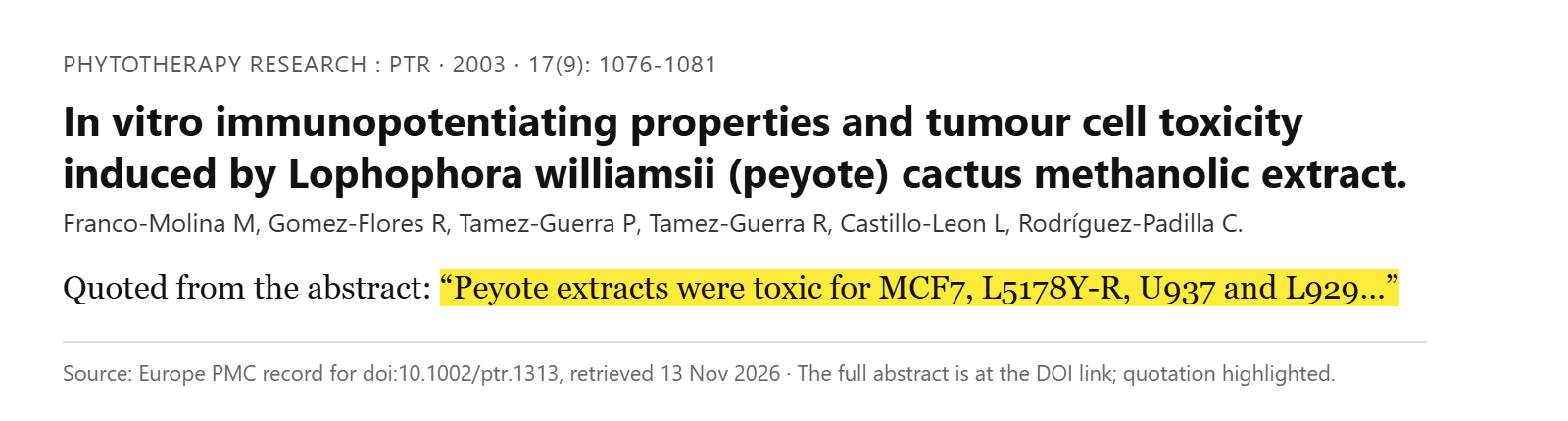
Quotation from the abstract of the published study (text from Europe PMC), highlighted in yellow. Source: Franco-Molina M, Gomez-Flores R, Tamez-Guerra P, et al. In vitro immunopotentiating properties and tumour cell toxicity induced by Lophophora williamsii (peyote) cactus methanolic extract. Phytother Res. 2003;17(9):1076-1081. https://doi.org/10.1002/ptr.1313
Cells, 2003 to 2015: iboga-type alkaloids, chemical relatives of ibogaine.
A plant alkaloid built on the same skeleton as ibogaine made drug-resistant cancer cells respond to chemotherapy again in the laboratory!
No study of ibogaine itself against cancer cells was found for this page. Its chemical relatives have been studied. Voacamine, a plant alkaloid that carries the iboga skeleton as one half of its structure, was tested on bone cancer (osteosarcoma) cells that had become resistant to the chemotherapy drug doxorubicin. At concentrations that did not harm normal human fibroblasts (connective tissue cells), voacamine helped the drug build up inside the resistant cells and kill them, and it also made doxorubicin more effective against a drug-resistant melanoma cell line. A separate study found that coronaridine, another iboga-type alkaloid, lowered a key protein of a growth pathway called Wnt in human colon cancer cells.
Sources: Meschini S, Marra M, Calcabrini A, Federici E, Galeffi C, Arancia G. Voacamine, a bisindolic alkaloid from Peschiera fuchsiaefolia, enhances the cytotoxic effect of doxorubicin on multidrug-resistant tumor cells. Int J Oncol. 2003;23(6):1505-1513. https://pubmed.ncbi.nlm.nih.gov/14612920/ · Condello M, Cosentino D, Corinti S, Di Felice G, Multari G, Gallo FR, Arancia G, Meschini S. Voacamine modulates the sensitivity to doxorubicin of resistant osteosarcoma and melanoma cells and does not induce toxicity in normal fibroblasts. J Nat Prod. 2014;77(4):855-862. https://doi.org/10.1021/np400950h · Ohishi K, Toume K, Arai MA, Sadhu SK, Ahmed F, Ishibashi M. Coronaridine, an iboga type alkaloid from Tabernaemontana divaricata, inhibits the Wnt signaling pathway by decreasing β-catenin mRNA expression. Bioorg Med Chem Lett. 2015;25(18):3937-3940. https://doi.org/10.1016/j.bmcl.2015.07.036
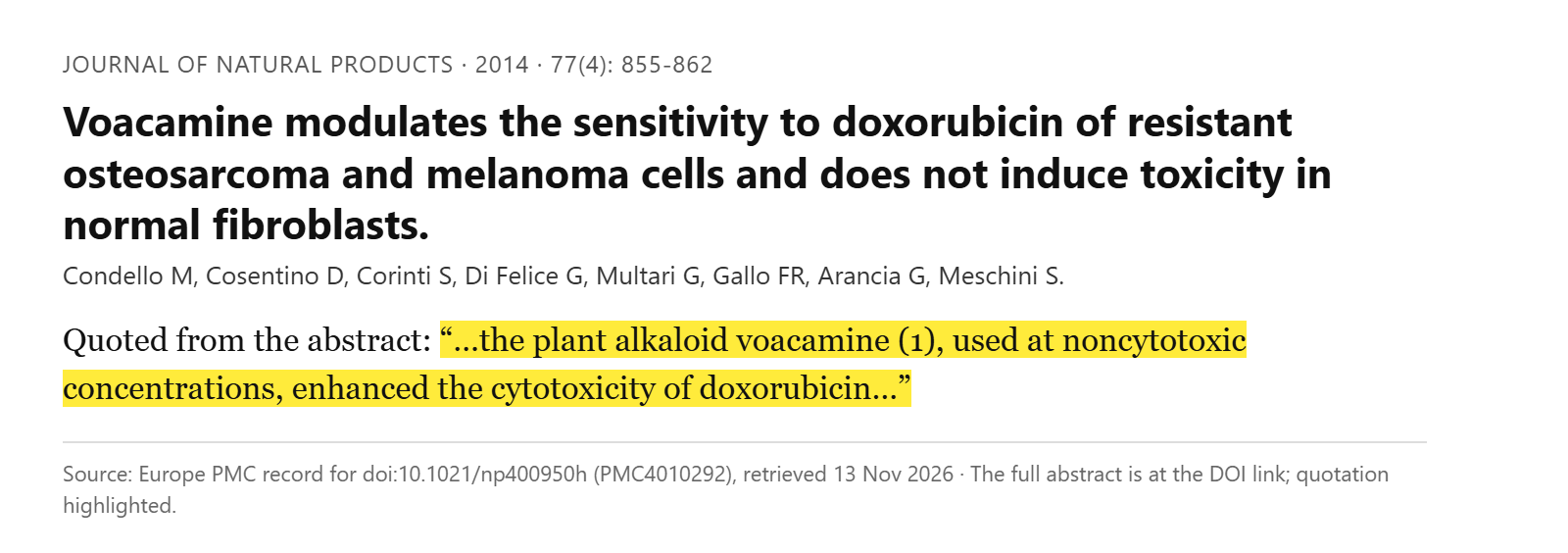
Quotation from the abstract of the published study (text from Europe PMC), highlighted in yellow. Source: Condello M, Cosentino D, Corinti S, et al. Voacamine modulates the sensitivity to doxorubicin of resistant osteosarcoma and melanoma cells and does not induce toxicity in normal fibroblasts. J Nat Prod. 2014;77(4):855-862. https://doi.org/10.1021/np400950h
Chemistry and cells, 2014: salvinorin A as a starting point.
Chemists rebuilt salvinorin A, the active compound of Salvia divinorum, into versions that slowed breast cancer cells in the laboratory!
Salvinorin A enters the brain quickly, which led researchers at the University of Kansas to ask whether its core structure could carry an anti-cancer design into the brain. They made quinone-containing analogues that slowed the growth of MCF7 breast cancer cells in the dish, showed no significant activity at the kappa opioid receptor through which salvinorin A produces its effects, and crossed a laboratory model of the blood-brain barrier. The compounds were also pumped out by P-glycoprotein, a transporter that cells use to expel drugs, so the authors say further redesign is needed.
Source: Vasiljevik T, Groer CE, Lehner K, Navarro H, Prisinzano TE. Studies toward the development of antiproliferative neoclerodanes from salvinorin A. J Nat Prod. 2014;77(8):1817-1824. https://doi.org/10.1021/np5002048
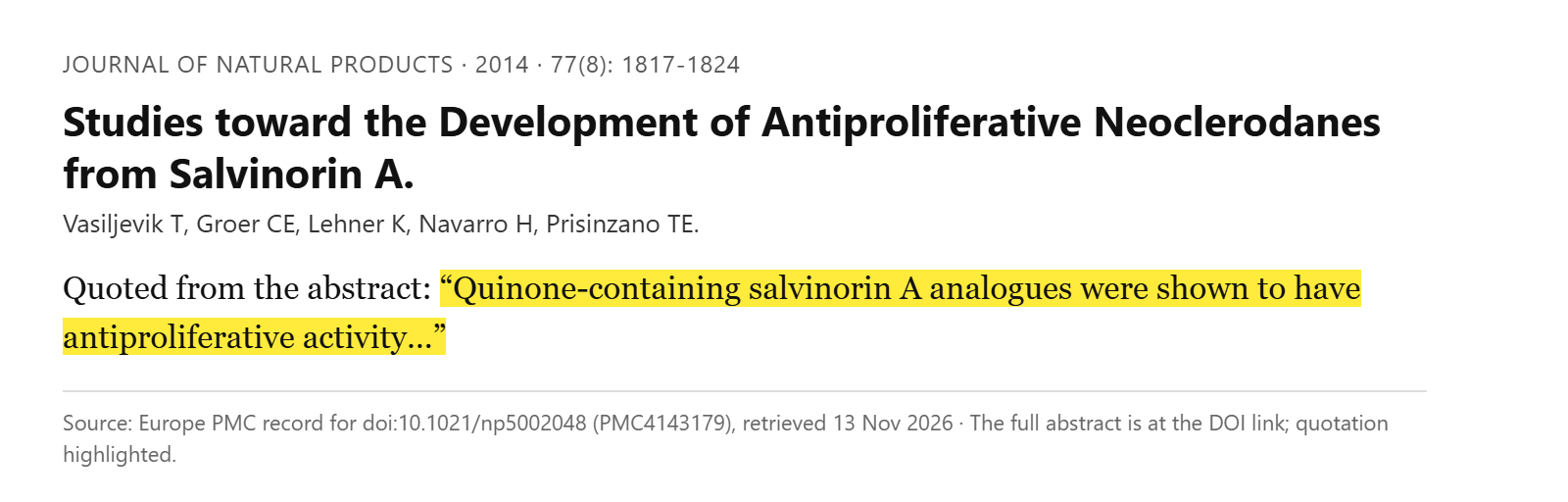
Quotation from the abstract of the published study (text from Europe PMC), highlighted in yellow. Source: Vasiljevik T, Groer CE, Lehner K, et al. Studies toward the development of antiproliferative neoclerodanes from salvinorin A. J Nat Prod. 2014;77(8):1817-1824. https://doi.org/10.1021/np5002048
Review (2026): where the whole field stands.
Researchers are now mapping how psychedelics might reach tumours through the nervous system and the immune system.
A peer-reviewed review published in the journal Psychedelics in November 2026, by Professor Xiaohui Wang of the Chinese Academy of Sciences and colleagues, surveyed the literature from 2000 through 2025. It describes how some tumours connect themselves to nerve cells, and how the serotonin 5-HT2A receptor, the main target of classic psychedelics, sits on some immune cells, where its activation has been linked to lower inflammatory signals. The review is careful in both directions: some animal studies found faster tumour growth when psychedelics were given alone under certain conditions, and the authors state that current evidence does not support adding psychedelics to standard cancer treatment. Other experimental work found that pairing a psychedelic with immune checkpoint inhibitors (a leading type of cancer immunotherapy) coincided with better anti-tumour responses than the immunotherapy alone.
Source: Cheng F, et al. Exploring cancer neuroscience with psychedelics: brain-body crosstalk, neuroimmune modulation, and implications from tumor biology to end-of-life support. Psychedelics. 2026. https://doi.org/10.61373/pp026w.0009
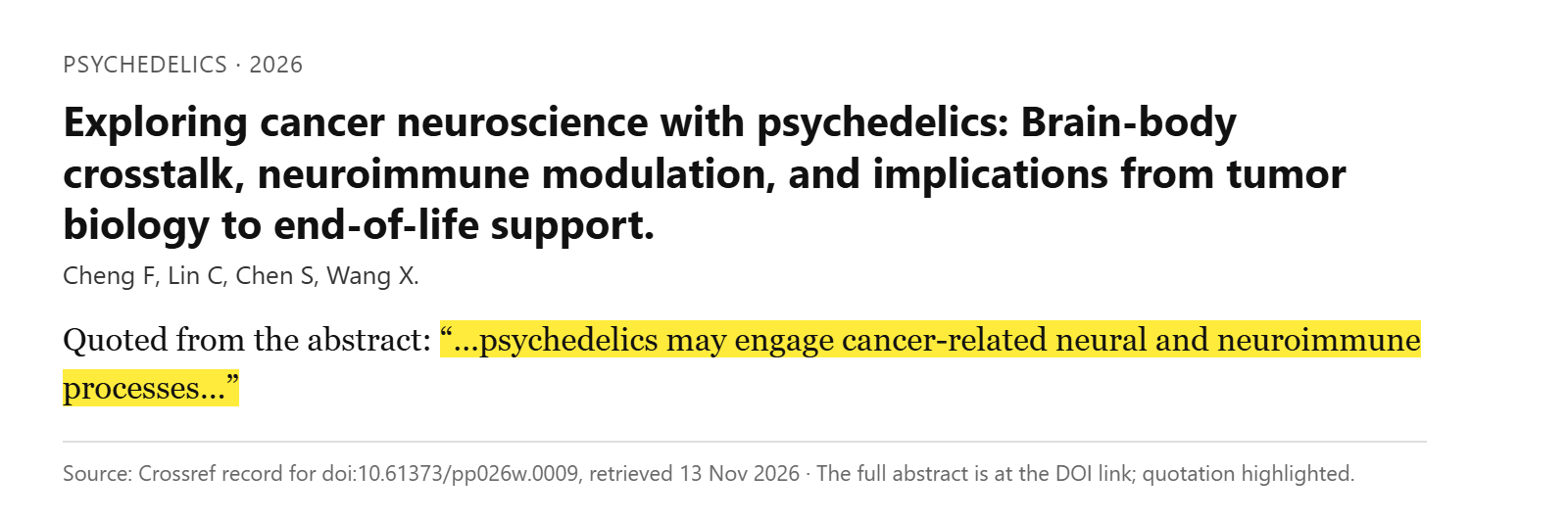
Quotation from the abstract of the published review (text from the Crossref record), highlighted in yellow. Source: Cheng F, Lin C, Chen S, et al. Exploring cancer neuroscience with psychedelics: brain-body crosstalk, neuroimmune modulation, and implications from tumor biology to end-of-life support. Psychedelics. 2026. https://doi.org/10.61373/pp026w.0009
Case reports and personal accounts
Case report, 2022: one woman with advanced breast cancer, chemotherapy, cannabis oil and psilocybin.
Her tumours could no longer be seen on scans after chemotherapy alongside cannabis oil and psilocybin, and she stayed disease-free for 18 months.
Researchers in the United Kingdom and the United States described a 49-year-old woman diagnosed in August 2018 with stage IV breast cancer that had spread to her bones, liver and lymph nodes. She had standard chemotherapy and, by her own choice, also took cannabis oil and psilocybin. By January 2019 her scans showed no remaining tumours and chemotherapy was stopped; she continued the cannabis oil and psilocybin and remained disease-free. In September 2019 she cut her cannabis dose and paused the psilocybin, and by June 2020 the cancer had returned. She restarted both alongside chemotherapy, and the report describes favourable results sixteen months after the recurrence was found, with evidence that the cancer was receding.
Source: Zafar R, Sulak D, Brambila J, Nutt D, Schlag A. Raising awareness: the implementation of medical cannabis and psychedelics used as an adjunct to standard therapy in the treatment of advanced metastatic breast cancer. Drug Sci Policy Law. 2022;8:20503245221114323. https://doi.org/10.1177/20503245221114323
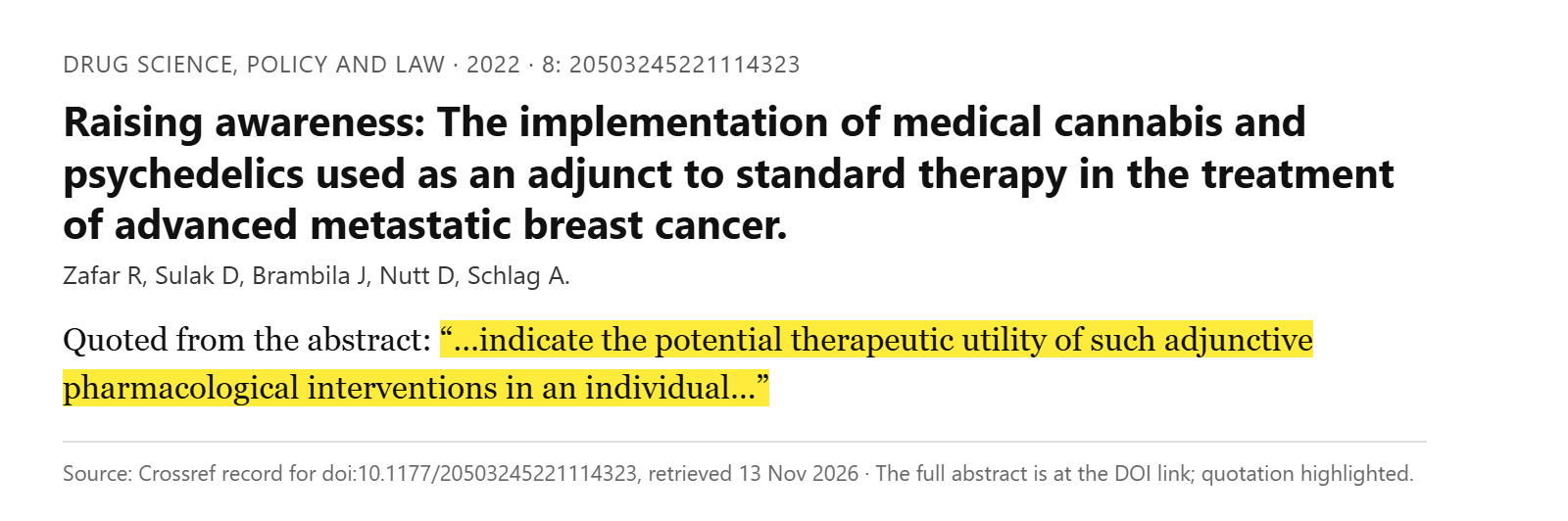
Quotation from the abstract of the published case report (text from the Crossref record), highlighted in yellow. Source: Zafar R, Sulak D, Brambila J, et al. Raising awareness: the implementation of medical cannabis and psychedelics used as an adjunct to standard therapy in the treatment of advanced metastatic breast cancer. Drug Sci Policy Law. 2022;8:20503245221114323. https://doi.org/10.1177/20503245221114323
Personal account, 1998 and 1999: Donald Topping, liver cancer and ayahuasca.
A University of Hawai‘i professor wrote his own account of ayahuasca after a diagnosis of cancer in the liver. He lived seven more years.
Donald M. Topping, Professor Emeritus at the University of Hawai‘i, had been treated for colon cancer and in 1996 learned that cancer had appeared in his liver. He wrote that surgeons put his chances of survival at around 25 to 30 percent. He had half of his liver removed, declined the chemotherapy that was recommended afterward, and took part in ayahuasca sessions. After his fourth session a blood test for CEA, a marker used to follow this cancer, came back normal. He described all of this in the Bulletin of the Multidisciplinary Association for Psychedelic Studies in 1998.
Sources: Topping DM. Ayahuasca and Cancer: One Man’s Experience. MAPS Bulletin. 1998;8(3):22-26. https://maps.org/news-letters/v08n3/08322top.html · Topping DM. Ayahuasca and Cancer: A Postscript. MAPS Bulletin. 1999;9(2). https://maps.org/news-letters/v09n2/09222top.html
Accounts in books: three memoirs.
Three published memoirs describe cancers that their authors say were healed in ayahuasca ceremonies.
In Black Smoke: Healing and Ayahuasca Shamanism in the Amazon, the composer Margaret De Wys describes being diagnosed with breast cancer and, in her account, being healed through ayahuasca rituals with a Shuar healer in Ecuador. In Ayahuasca Medicine (2014), Alan Shoemaker, an American who trained as a healer in Peru, writes that he healed his mother of liver cancer. In The Jaguar that Roams the Mind, Robert Tindall describes witnessing what the book calls the miraculous healing of a woman with a brain tumour at a centre in the Peruvian rainforest.
Sources: De Wys M. Black Smoke. Inner Traditions. https://www.simonandschuster.ca/books/Black-Smoke/Margaret-De-Wys/9781594774621 · Shoemaker A. Ayahuasca Medicine. Park Street Press; 2014. https://www.simonandschuster.ca/books/Ayahuasca-Medicine/Alan-Shoemaker/9781620551943 · Tindall R. The Jaguar that Roams the Mind. https://www.simonandschuster.co.uk/books/The-Jaguar-that-Roams-the-Mind/Robert-Tindall/9781594777585 · Beyer SV. Ayahuasca and cancer. https://singingtotheplants.com/2009/01/ayahuasca-and-cancer/
Accounts in a book: San Pedro.
One book gathers healing stories from San Pedro ceremonies in Peru, cancer among them.
In The Hummingbird’s Journey to God (2009), Ross Heaven presents interviews and case studies with San Pedro shamans and participants. The publisher’s description says the cactus brew is said to have healed physical problems including cancer, diabetes and paralysis.
Source: Heaven R. The Hummingbird’s Journey to God: Perspectives on San Pedro, the Cactus of Vision. John Hunt Publishing; 2009. https://www.simonandschuster.co.uk/books/Hummingbirds-Journey-To-God-Perspective/Ross-Heaven/9781846946387
Cancer research: cannabis
The same question has been asked about cannabis, and there the research has gone further, into small trials in people. Cannabis is not a classic psychedelic, but it belongs to the same conversation about plant medicines and cancer, so the main studies are set out here, each labeled by the kind of study it is.
The U.S. National Cancer Institute’s summary.
A meta-analysis of 34 laboratory and animal studies in glioma: all but one confirmed that cannabinoids selectively kill tumor cells!
The National Cancer Institute’s summary for health professionals (latest update May 13, 2025) reports that “Cannabinoids may cause antitumor effects by various mechanisms, including induction of cell death, inhibition of cell growth”, and that CBD together with THC may enhance the antitumor activity of temozolomide, a chemotherapy drug, in some mouse models of cancer! The summary also gives the regulatory status as of that update: “The U.S. Food and Drug Administration has not approved Cannabis as a treatment for cancer or any other medical condition.”
“A meta-analysis of 34 in vitro and in vivo studies of cannabinoids in glioma reported that all but one study confirmed that cannabinoids selectively kill tumor cells.”
PDQ Integrative, Alternative, and Complementary Therapies Editorial Board. Cannabis and Cannabinoids (PDQ®)–Health Professional Version. National Cancer Institute. Updated May 13, 2025. Accessed October 27, 2026. https://www.cancer.gov/about-cancer/treatment/cam/hp/cannabis-pdq
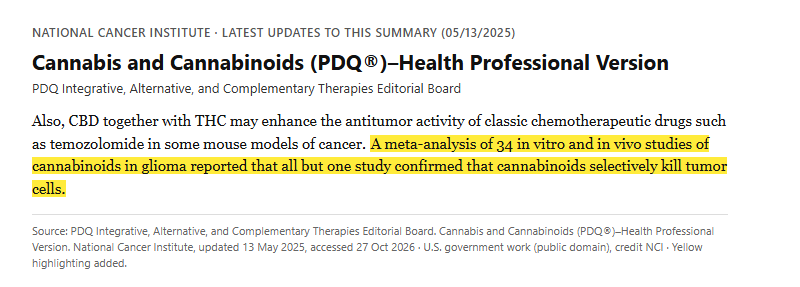
Page of the U.S. National Cancer Institute (public domain), key sentence highlighted in yellow. Source: PDQ Integrative, Alternative, and Complementary Therapies Editorial Board. Cannabis and Cannabinoids (PDQ®)–Health Professional Version. National Cancer Institute. Updated May 13, 2025. Accessed October 27, 2026. https://www.cancer.gov/about-cancer/treatment/cam/hp/cannabis-pdq
Review of cells and animals (2022).
A large body of preclinical data: cannabinoids inhibited tumour cell proliferation, invasion and metastasis, angiogenesis and chemoresistance, and induced apoptosis and autophagy in laboratory research!
A 2022 review of preclinical research reported that cannabinoid compounds have been successfully tested as a systemic therapeutic option in a number of preclinical models over the past decades. It describes cannabinoids as potential combination partners for established chemotherapeutic agents, and points to promising compounds beyond THC, such as the non-psychoactive phytocannabinoid cannabidiol!
“Accordingly, there is considerable evidence for cannabinoid-mediated inhibition of tumour cell proliferation, tumour invasion and metastasis, angiogenesis and chemoresistance, as well as induction of apoptosis and autophagy.”
Hinz B, Ramer R. Cannabinoids as anticancer drugs: current status of preclinical research. Br J Cancer. 2022;127(1):1-13. https://doi.org/10.1038/s41416-022-01727-4
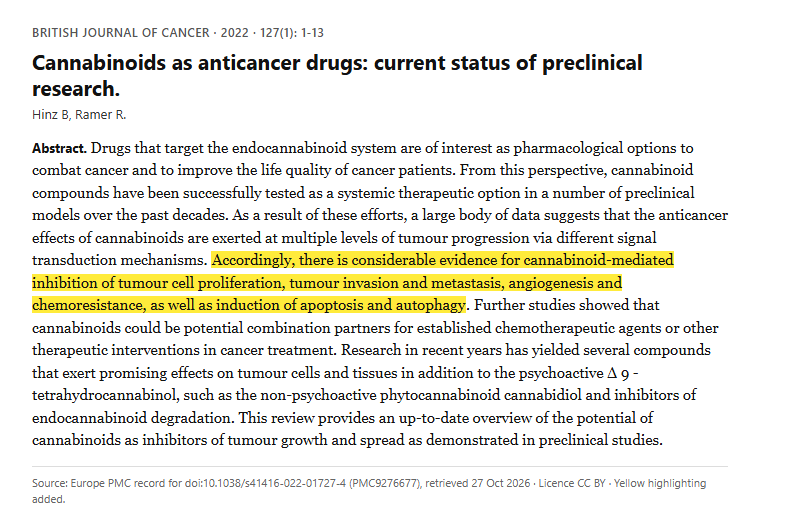
Abstract of the published study (text from Europe PMC), key sentence highlighted in yellow. Source: Hinz B, Ramer R. Cannabinoids as anticancer drugs: current status of preclinical research. Br J Cancer. 2022;127(1):1-13. https://doi.org/10.1038/s41416-022-01727-4
Animals (mice), 2011.
THC with temozolomide exerted a strong antitumoral action in glioma xenografts in mice, including tumors that are resistant to temozolomide!
In glioma xenografts (human brain tumor cells grown in mice), researchers reported that THC combined with temozolomide, the standard chemotherapy for glioblastoma, “exerts a strong antitumoral action in glioma xenografts, an effect that is also observed in tumors that are resistant to TMZ treatment”, TMZ being temozolomide.
“Moreover, treatment with TMZ and submaximal doses of THC and CBD produced a strong antitumoral action in both TMZ-sensitive and TMZ-resistant tumors.”
Torres S, Lorente M, Rodríguez-Fornés F, et al. A combined preclinical therapy of cannabinoids and temozolomide against glioma. Mol Cancer Ther. 2011;10(1):90-103. https://doi.org/10.1158/1535-7163.MCT-10-0688
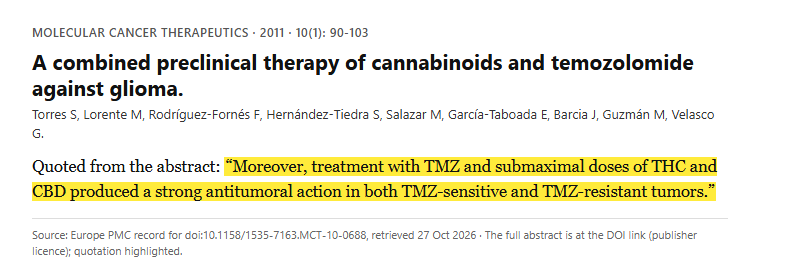
Quotation from the abstract of the published study (text from Europe PMC), highlighted in yellow. Source: Torres S, Lorente M, Rodríguez-Fornés F, et al. A combined preclinical therapy of cannabinoids and temozolomide against glioma. Mol Cancer Ther. 2011;10(1):90-103. https://doi.org/10.1158/1535-7163.MCT-10-0688
Early-phase trial in people (2006).
In a first pilot trial of 9 patients with recurrent glioblastoma, THC delivered into the tumor was safe, and tumour-cell Ki67 staining decreased in the 2 patients tested!
The first test in people was a pilot study in which “nine patients with recurrent glioblastoma multiforme were administered THC intratumoraly”, after standard treatment had failed. Its main aim was safety, and the researchers reported that cannabinoid delivery was safe and could be achieved without overt psychoactive effects!
“Delta(9)-Tetrahydrocannabinol inhibited tumour-cell proliferation in vitro and decreased tumour-cell Ki67 immunostaining when administered to two patients.”
Guzmán M, Duarte MJ, Blázquez C, et al. A pilot clinical study of Delta9-tetrahydrocannabinol in patients with recurrent glioblastoma multiforme. Br J Cancer. 2006;95(2):197-203. https://doi.org/10.1038/sj.bjc.6603236
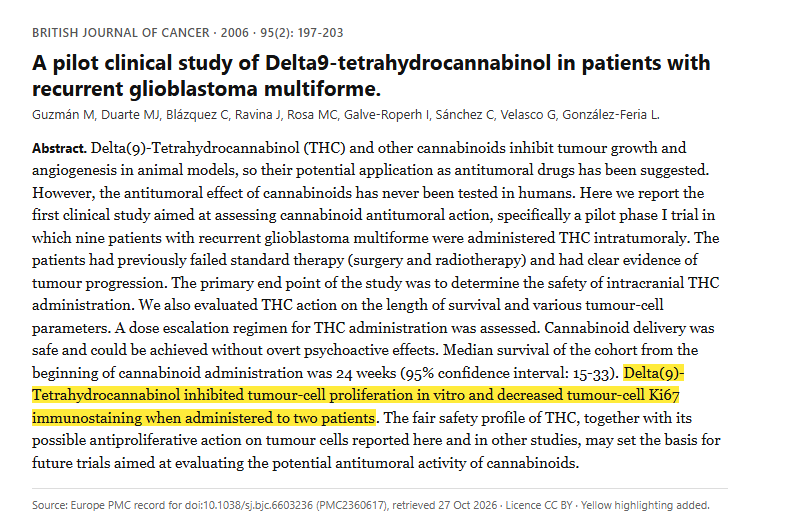
Abstract of the published study (text from Europe PMC), key sentence highlighted in yellow. Source: Guzmán M, Duarte MJ, Blázquez C, et al. A pilot clinical study of Delta9-tetrahydrocannabinol in patients with recurrent glioblastoma multiforme. Br J Cancer. 2006;95(2):197-203. https://doi.org/10.1038/sj.bjc.6603236
Early-phase trial in people (2021).
83% vs 44% survival at 1 year in Part 2 of a randomized early-phase trial: 12 people given nabiximols, a cannabis-based spray, and 9 given placebo, all alongside temozolomide!
A small trial in 27 people with glioblastoma that had come back added nabiximols, a cannabis-based mouth spray, to temozolomide chemotherapy; 21 of them were randomized to nabiximols or a placebo. The researchers reported that survival at 1 year was 83% for nabiximols- and 44% for placebo-treated patients, and that nabiximols had acceptable safety and tolerability with no drug-drug interaction identified! The trial was sponsored by GW Research Ltd.
“The observed survival differences support further exploration in an adequately powered randomised controlled trial.”
Twelves C, Sabel M, Checketts D, et al. A phase 1b randomised, placebo-controlled trial of nabiximols cannabinoid oromucosal spray with temozolomide in patients with recurrent glioblastoma. Br J Cancer. 2021;124(8):1379-1387. https://doi.org/10.1038/s41416-021-01259-3
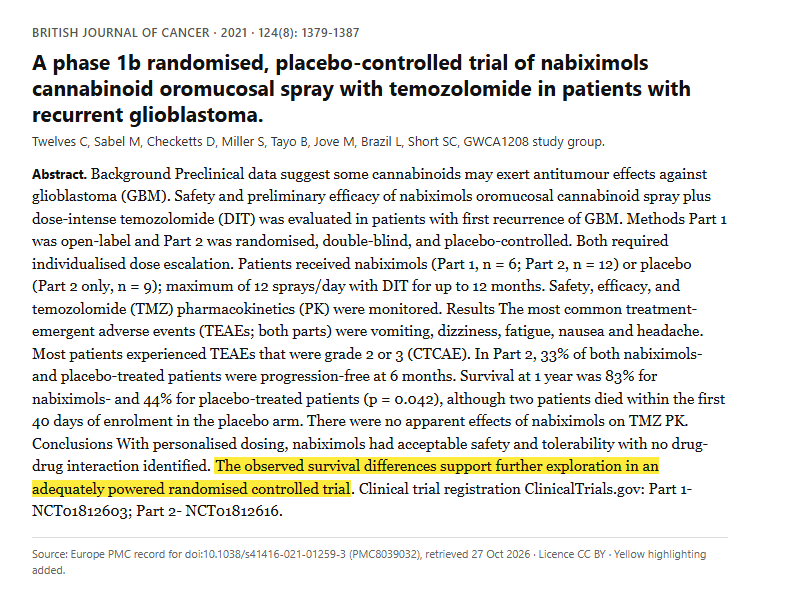
Abstract of the published study (text from Europe PMC), key sentence highlighted in yellow. Source: Twelves C, Sabel M, Checketts D, et al. A phase 1b randomised, placebo-controlled trial of nabiximols cannabinoid oromucosal spray with temozolomide in patients with recurrent glioblastoma. Br J Cancer. 2021;124(8):1379-1387. https://doi.org/10.1038/s41416-021-01259-3
Mice and an observational study in people (2023).
Mice given THC with an anti-PD-1 antibody lived a median of 54 days, against 31 days with the antibody alone!
A 2023 study combined mouse experiments with a look at 201 people with metastatic non-small cell lung cancer who were treated with pembrolizumab as a first-line monotherapy. The researchers reported that median survival of the mice receiving a control vehicle, THC, an anti-PD-1 antibody or their combination was 21, 24, 31 and 54 days, respectively!
“Preclinical and clinical data suggest no deleterious effect of cannabis on the activity of pembrolizumab as first-line monotherapy for advanced NSCLC.”
Waissengrin B, Leshem Y, Taya M, et al. The use of medical cannabis concomitantly with immune checkpoint inhibitors in non-small cell lung cancer: a sigh of relief? Eur J Cancer. 2023;180:52-61. https://doi.org/10.1016/j.ejca.2022.11.022
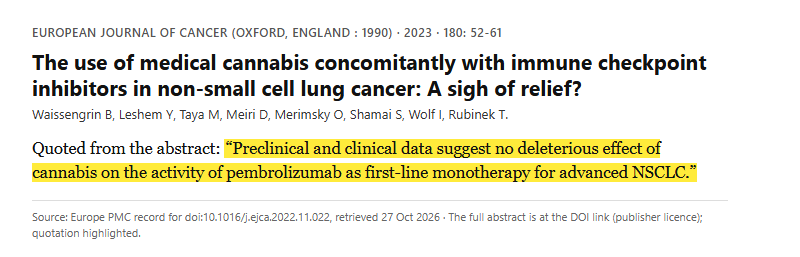
Quotation from the abstract of the published study (text from Europe PMC), highlighted in yellow. Source: Waissengrin B, Leshem Y, Taya M, et al. The use of medical cannabis concomitantly with immune checkpoint inhibitors in non-small cell lung cancer: a sigh of relief? Eur J Cancer. 2023;180:52-61. https://doi.org/10.1016/j.ejca.2022.11.022