


Psychedelic medicine is bringing real hope to people living with cancer! Pooling two placebo-controlled trials in 79 patients, researchers reported that psilocybin-assisted psychotherapy significantly improved anxiety, depression, hostility and more (Petridis, 2024). At the 4.5-year follow-up, 60-80% of participants still met criteria for clinically significant antidepressant or anxiolytic responses after psilocybin therapy (Agin-Liebes, 2020). In advanced cancer, 70% of patients responded to intranasal ketamine by Day 8 and 45% reached remission (Rosenblat, 2023), and 77.8% of patients given ketamine had a clinically meaningful drop in mucositis pain, compared with 14.3% on placebo (Peechatanan, 2026). Encouraging to see psilocybin and ketamine research growing in cancer care!
Key studies
Study 1. Pooled analysis of two placebo-controlled crossover trials of psilocybin-assisted psychotherapy in 79 people with cancer-related distress (Petridis, 2024)
Across 79 patients with cancer, psilocybin-assisted psychotherapy significantly improved anxiety, depression, hostility and more!
Researchers pooled previously unpublished data from two phase II, randomized, placebo-controlled crossover trials involving 79 participants with cancer-related distress and examined 9 psychiatric symptom dimensions. Psilocybin-assisted psychotherapy significantly improved anxiety, depression, interpersonal sensitivity, hostility, obsession-compulsion and somatization, and the clinical improvements were consistent between the two trials. The authors concluded that this therapy has the potential to be a comprehensive mental health treatment for patients with cancer.
“PAP significantly improved anxiety, depression, interpersonal sensitivity, hostility, obsession-compulsion and somatization without inducing any lasting phobia, paranoia or psychosis. Clinical improvements were consistent between trials.”
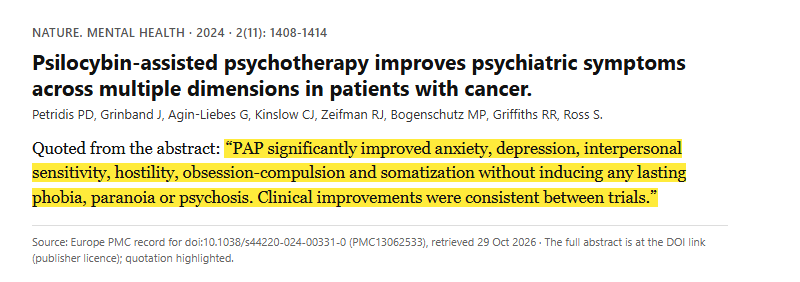
Quotation from the abstract of the published study (text from Europe PMC), highlighted in yellow. Source: Petridis PD, Grinband J, Agin-Liebes G, et al. Psilocybin-assisted psychotherapy improves psychiatric symptoms across multiple dimensions in patients with cancer. Nat Ment Health. 2024;2(11):1408-1414. https://doi.org/10.1038/s44220-024-00331-0
Study 2. Intranasal ketamine for major depression in 20 patients with advanced cancer receiving palliative care (Rosenblat, 2023)
70% of patients with advanced cancer responded to ketamine by Day 8, and 45% reached remission!
In a single-arm, open-label phase II trial at the Princess Margaret Cancer Centre in Toronto, 20 participants with advanced cancer and moderate to severe major depression received intranasal ketamine over one week. Researchers reported striking Day 8 response and remission rates of 70% and 45%, with mean MADRS scores falling from 31 to 11, an overall decrease of 20 points (p < 0.001). Remarkably, the benefit was partially sustained into the second week without further doses, with a Day 14 mean MADRS score of 14.
“The Day 8 antidepressant response (MADRS decreased by >50%) and remission (MADRS < 10 on Day 8) rates were high at 70% and 45%, respectively. Mean MADRS scores decreased significantly from baseline (mean MADRS of 31, standard deviation 7.6) to Day 8 (11 +/− 7.4) with an overall decrease of 20 points (p < 0.001).”
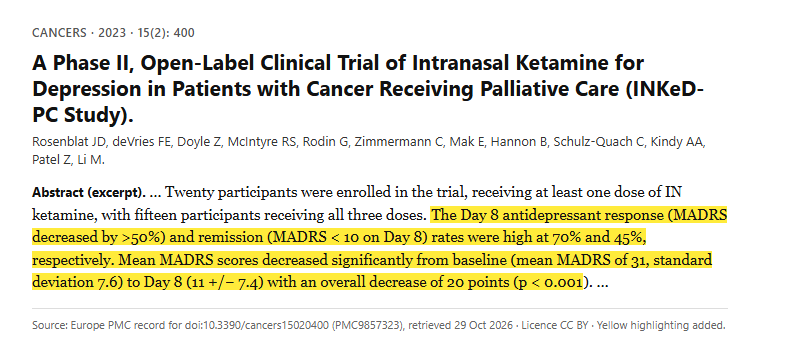
Abstract of the published study (text from Europe PMC), key sentence highlighted in yellow. Source: Rosenblat JD, deVries FE, Doyle Z, et al. A Phase II, Open-Label Clinical Trial of Intranasal Ketamine for Depression in Patients with Cancer Receiving Palliative Care (INKeD-PC Study). Cancers (Basel). 2023;15(2):400. https://doi.org/10.3390/cancers15020400
Study 3. In-depth interviews after psilocybin-assisted psychotherapy with 13 adults with cancer-related anxiety (Belser, 2017)
13 people with cancer-related anxiety described joy, bliss, love, wisdom lessons and revised life priorities after psilocybin-assisted psychotherapy!
Researchers carried out the first qualitative study of participant experiences in psilocybin-assisted psychotherapy, interviewing 13 adults aged 22 to 69 with clinically elevated anxiety associated with a cancer diagnosis after a moderate dose of psilocybin with meaning-focused psychotherapy. Themes found in all or nearly all transcripts included relational embeddedness, wisdom lessons, revised life priorities and a desire to repeat the experience, while most participants described exalted feelings of joy, bliss and love and a movement from separateness to interconnectedness. Remarkably, some participants reported improved relationships, forgiveness and lasting changes to their sense of identity. The authors concluded that their findings support psilocybin-assisted psychotherapy as a potentially effective treatment for psychological distress in cancer patients.
“The findings support the conclusion that psilocybin-assisted psychotherapy may provide an effective treatment for psychological distress in cancer patients.”
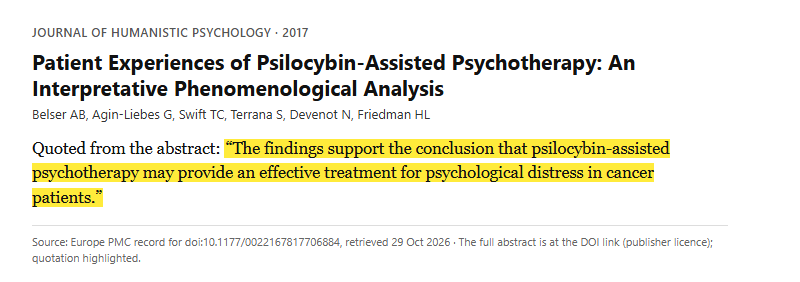
Quotation from the abstract of the published study (text from Europe PMC), highlighted in yellow. Source: Belser AB, Agin-Liebes G, Swift TC, et al. Patient Experiences of Psilocybin-Assisted Psychotherapy: An Interpretative Phenomenological Analysis. Journal of Humanistic Psychology. 2017. https://doi.org/10.1177/0022167817706884
Study 4. Systematic review and meta-analysis of psilocybin-assisted therapy in 132 patients with advanced cancer (Bader, 2024)
7 studies, 132 patients with advanced cancer: psilocybin-assisted therapy brought significant anxiety relief lasting to 6 to 6.5 months!
Researchers pooled 7 studies comprising 132 adults with advanced cancer and reported significant improvements in quality of life, pain control and anxiety relief following psilocybin-assisted therapy. The pooled analyses showed statistically significant reductions in anxiety symptoms at both 4 to 4.5 months and 6 to 6.5 months. The authors concluded that the findings provide compelling evidence for the potential benefits of psilocybin-assisted therapy in improving quality of life, pain control and anxiety relief in patients with advanced cancer.
“A total of 7 studies met the inclusion criteria for the systematic review, comprising 132 participants. The results revealed significant improvements in quality of life, pain control, and anxiety relief following psilocybin-assisted therapy, specifically results on anxiety relief. Pooled effect sizes indicated statistically significant reductions in symptoms of anxiety at both 4 to 4.5 months [35.15 (95%CI: 32.28-38.01)] and 6 to 6.5 months [33.06 (95%CI: 28.73-37.40)].”
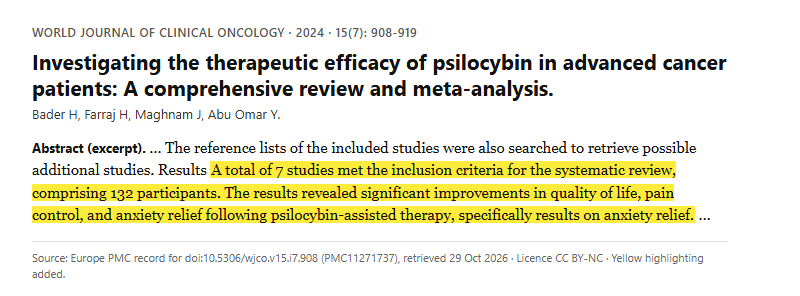
Abstract of the published study (text from Europe PMC), key sentence highlighted in yellow. Source: Bader H, Farraj H, Maghnam J, Abu Omar Y. Investigating the therapeutic efficacy of psilocybin in advanced cancer patients: A comprehensive review and meta-analysis. World J Clin Oncol. 2024;15(7):908-919. https://doi.org/10.5306/wjco.v15.i7.908
Study 5. Systematic review and meta-analysis of psilocybin- and ketamine-assisted therapy across eleven placebo-controlled trials in people with cancer (Schuman, 2025)
Across four randomized trials in 354 people with cancer, ketamine showed large, rapid effects on depression and anxiety!
This systematic review and meta-analysis searched four major databases for trials of psychedelic agents in cancer populations and included eleven placebo-controlled randomized trials and four open-label studies. Pooling four ketamine trials with 354 participants, researchers reported large, rapid effects on depression and anxiety (Hedges' g = -1.37). The authors concluded that psychedelic-assisted therapy may offer meaningful relief for cancer-related distress.
“Meta-analysis of four ketamine RCTs (n = 354) showed large, rapid effects on depression/anxiety (Hedges' g = -1.37, 95% CI: -2.66 to -0.08; I 2 = 92%).”
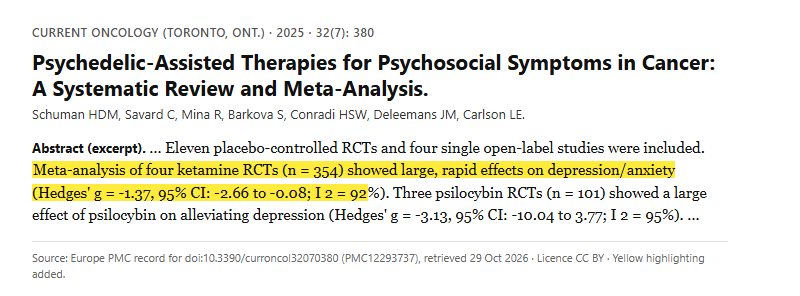
Abstract of the published study (text from Europe PMC), key sentence highlighted in yellow. Source: Schuman HDM, Savard C, Mina R, et al. Psychedelic-Assisted Therapies for Psychosocial Symptoms in Cancer: A Systematic Review and Meta-Analysis. Curr Oncol. 2025;32(7):380. https://doi.org/10.3390/curroncol32070380
Study 6. Systematic review of 10 clinical trials of psychedelic therapy in 445 people with serious or terminal illness, mostly cancer (Ross, 2018)
A systematic review of 10 clinical trials (445 participants) found that the four randomized trials produced rapid, robust, and sustained improvements in cancer-related distress!
This review was based on a systematic search of clinical trials from 1960-2018 of psychedelic treatment in patients with serious or terminal illnesses, the vast majority with advanced or terminal cancer. Six open-label trials published between 1964 and 1980 (n = 341), mostly with LSD, suggested improvements in cancer-related depression, anxiety, and fear of death. Four randomized controlled trials published between 2011 and 2016 (n = 104), mostly with psilocybin, demonstrated rapid, robust, and sustained improvements in cancer-related psychological and existential distress.
“Four RCTs trials were published between 2011 and 2016 ( n = 104), mostly with psilocybin treatment ( n = 92), and demonstrated that psychedelic-assisted treatment can produce rapid, robust, and sustained improvements in cancer-related psychological and existential distress.”
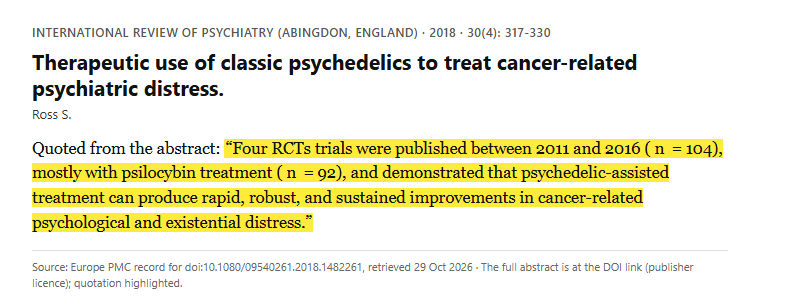
Quotation from the abstract of the published study (text from Europe PMC), highlighted in yellow. Source: Ross S. Therapeutic use of classic psychedelics to treat cancer-related psychiatric distress. Int Rev Psychiatry. 2018;30(4):317-330. https://doi.org/10.1080/09540261.2018.1482261
Study 7. Randomized, double-blind, crossover trial of ketamine versus saline in 10 cancer patients with pain unrelieved by morphine (Mercadante, 2000)
Ketamine, but not saline, significantly reduced pain in almost all 10 cancer patients whose pain morphine could not relieve!
In a randomized, controlled, double-blind, crossover study, 10 cancer patients whose pain was unrelieved by morphine received ketamine or saline solution. Researchers reported that ketamine, but not saline, significantly reduced pain intensity in almost all the patients at both doses tested, with the effect more pronounced at the higher dose. The authors concluded that ketamine can improve morphine analgesia in difficult pain syndromes such as neuropathic pain.
“Ketamine, but not saline solution, significantly reduced the pain intensity in almost all the patients at both doses. This effect was more relevant in patients treated with higher doses.”
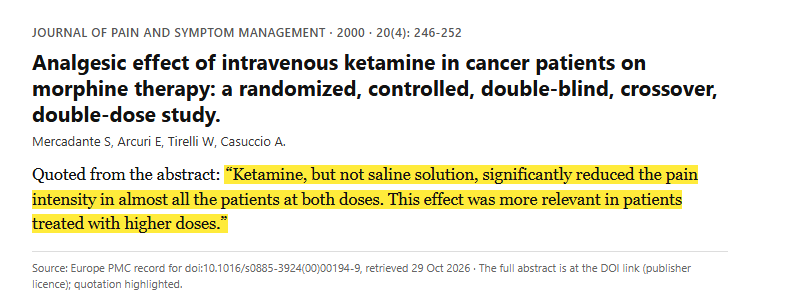
Quotation from the abstract of the published study (text from Europe PMC), highlighted in yellow. Source: Mercadante S, Arcuri E, Tirelli W, Casuccio A. Analgesic effect of intravenous ketamine in cancer patients on morphine therapy: a randomized, controlled, double-blind, crossover, double-dose study. J Pain Symptom Manage. 2000;20(4):246-252. https://doi.org/10.1016/s0885-3924(00)00194-9
Study 8. Single-dose ketamine compared with placebo for post-surgery fatigue in colorectal cancer patients (Zhao, 2022)
Ketamine beat placebo on the fatigue scale by 6.4 points at day 3 after colorectal cancer surgery!
In a prospective, double-blind, randomized pilot trial, 32 patients undergoing radical laparoscopic surgery for colorectal cancer received a single low dose of ketamine and 31 received placebo. By day 3, the ketamine group had lower Christensen fatigue scores (absolute difference -1.13) and was superior on the Identity Consequence Fatigue Scale (absolute difference -6.4). Researchers also reported that the inflammatory and neural-injury markers TNF-α, IL-6, S100β and NSE were significantly higher in the placebo group than in the ketamine group within 24 h after surgery.
“Compared with placebo group, the Christensen score was lower in ketamine group at day 3 (absolute difference, -1.13; 95 % confidence interval [CI], -2.02 to -0.24; P = 0.012). Ketamine group was superior to the placebo group with regard to the ICFS scores at day 3 (absolute difference, -6.4; 95 % CI, -11.4 to -1.4; P = 0.013).”
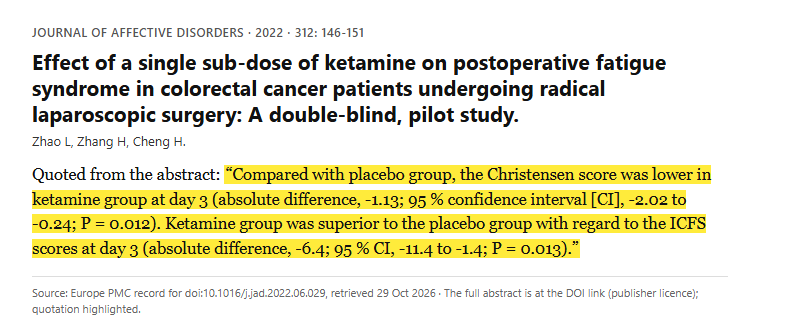
Quotation from the abstract of the published study (text from Europe PMC), highlighted in yellow. Source: Zhao L, Zhang H, Cheng H. Effect of a single sub-dose of ketamine on postoperative fatigue syndrome in colorectal cancer patients undergoing radical laparoscopic surgery: A double-blind, pilot study. J Affect Disord. 2022;312:146-151. https://doi.org/10.1016/j.jad.2022.06.029
Study 9. Target trial emulation of esketamine versus oral antidepressants in 1751 matched pairs of patients with cancer-related depression (Chen, 2026)
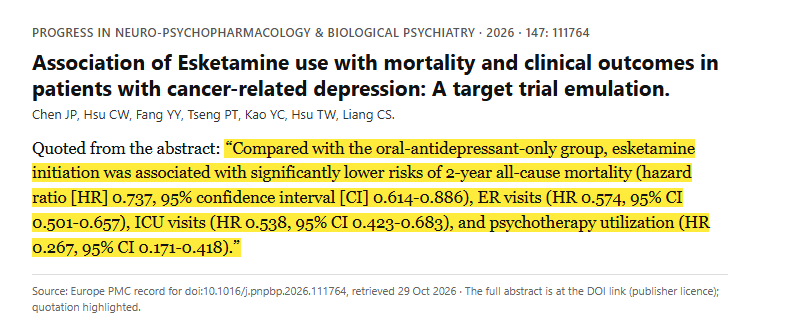
Esketamine initiation was associated with a lower risk of death at 2 years (hazard ratio 0.737) than oral antidepressants alone in people with cancer-related depression!
Using anonymized electronic health records from the TriNetX network, researchers emulated a target trial comparing adults with cancer-related depression who started esketamine with those on oral antidepressant monotherapy, with 1751 patients per group after propensity score matching. Esketamine initiation was associated with significantly lower risks of 2-year all-cause mortality (HR 0.737), emergency room visits (HR 0.574) and ICU visits (HR 0.538). The esketamine group also showed a lower risk of ischemic stroke (HR 0.394), and these associations were more pronounced in older patients, a striking real-world signal for people living with cancer.
“Compared with the oral-antidepressant-only group, esketamine initiation was associated with significantly lower risks of 2-year all-cause mortality (hazard ratio [HR] 0.737, 95% confidence interval [CI] 0.614-0.886), ER visits (HR 0.574, 95% CI 0.501-0.657), ICU visits (HR 0.538, 95% CI 0.423-0.683), and psychotherapy utilization (HR 0.267, 95% CI 0.171-0.418).”
Quotation from the abstract of the published study (text from Europe PMC), highlighted in yellow. Source: Chen JP, Hsu CW, Fang YY, et al. Association of Esketamine use with mortality and clinical outcomes in patients with cancer-related depression: A target trial emulation. Prog Neuropsychopharmacol Biol Psychiatry. 2026;147:111764. https://doi.org/10.1016/j.pnpbp.2026.111764
Study 10. Review of ten clinical studies of ketamine and esketamine for pain and depression together in people with cancer (Moriarty, 2026)
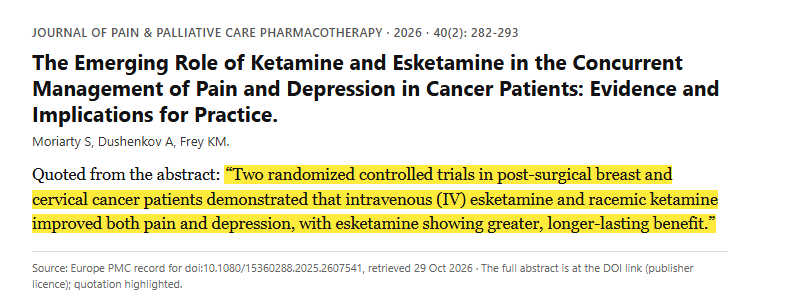
Two randomized controlled trials found esketamine and ketamine improved both pain and depression in cancer patients!
This review examined ten clinical studies published between 2018 and 2024 testing ketamine and esketamine for cancer-related pain and depression at the same time. Two randomized controlled trials in post-surgical breast and cervical cancer patients showed that intravenous esketamine and racemic ketamine improved both pain and depression, with esketamine giving greater, longer-lasting benefit. In the depression-focused studies, intravenous and intranasal administration consistently improved mood, and the authors concluded that, with their rapid dual action, ketamine and esketamine may serve as valuable adjunctive therapies in palliative care.
“Two randomized controlled trials in post-surgical breast and cervical cancer patients demonstrated that intravenous (IV) esketamine and racemic ketamine improved both pain and depression, with esketamine showing greater, longer-lasting benefit.”
Quotation from the abstract of the published study (text from Europe PMC), highlighted in yellow. Source: Moriarty S, Dushenkov A, Frey KM. The Emerging Role of Ketamine and Esketamine in the Concurrent Management of Pain and Depression in Cancer Patients: Evidence and Implications for Practice. J Pain Palliat Care Pharmacother. 2026;40(2):282-293. https://doi.org/10.1080/15360288.2025.2607541
Study 11. Long-term follow-up of psilocybin-assisted psychotherapy in 15 people with life-threatening cancer (Agin-Liebes, 2020)
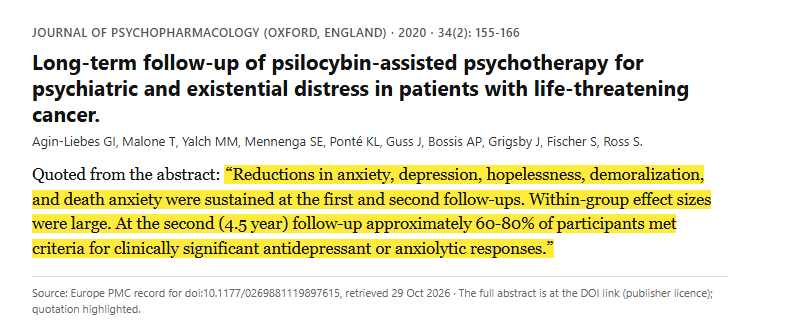
60-80% of participants still met criteria for clinically significant antidepressant or anxiolytic responses 4.5 years after psilocybin therapy!
Researchers followed up 15 participants from a randomized trial comparing psilocybin with niacin alongside psychotherapy, at an average of 3.2 and 4.5 years after psilocybin administration. Reductions in anxiety, depression, hopelessness, demoralization, and death anxiety were sustained at both follow-ups, with large within-group effect sizes. Remarkably, 71-100% of participants attributed positive life changes to the psilocybin-assisted therapy experience and rated it among the most personally meaningful and spiritually significant experiences of their lives.
“Reductions in anxiety, depression, hopelessness, demoralization, and death anxiety were sustained at the first and second follow-ups. Within-group effect sizes were large. At the second (4.5 year) follow-up approximately 60-80% of participants met criteria for clinically significant antidepressant or anxiolytic responses.”
Quotation from the abstract of the published study (text from Europe PMC), highlighted in yellow. Source: Agin-Liebes GI, Malone T, Yalch MM, et al. Long-term follow-up of psilocybin-assisted psychotherapy for psychiatric and existential distress in patients with life-threatening cancer. J Psychopharmacol. 2020;34(2):155-166. https://doi.org/10.1177/0269881119897615
Study 12. Psilocybin-enhanced group psychotherapy in 12 patients with cancer and depression (Lewis, 2023)
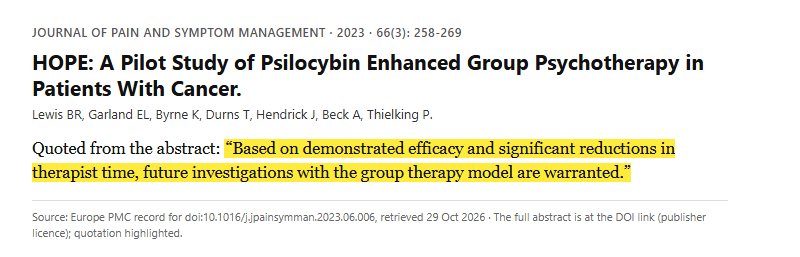
Depression scores fell from 21.5 to 10.09 on the HAM-D just two weeks after psilocybin group therapy!
The HOPE pilot study tested psilocybin-assisted group therapy in cancer patients with a DSM-5 depressive disorder, delivered to cohorts of four participants over a three-week programme of group preparation, one group psilocybin session and group integration. Twelve participants completed the trial, and researchers reported a clinically substantial decrease in clinician-rated HAM-D depression scores from 21.5 at baseline to 10.09 at two weeks, with outcomes followed to six months. The authors highlighted demonstrated efficacy together with significant reductions in therapist time, pointing to a scalable group model for cancer care.
“Based on demonstrated efficacy and significant reductions in therapist time, future investigations with the group therapy model are warranted.”
Quotation from the abstract of the published study (text from Europe PMC), highlighted in yellow. Source: Lewis BR, Garland EL, Byrne K, et al. HOPE: A Pilot Study of Psilocybin Enhanced Group Psychotherapy in Patients With Cancer. J Pain Symptom Manage. 2023;66(3):258-269. https://doi.org/10.1016/j.jpainsymman.2023.06.006
Study 13. Open-label psilocybin-assisted group therapy in 30 cancer patients with major depressive disorder (Shnayder, 2023)
30 cancer patients with major depression showed psycho-social-spiritual growth after psilocybin-assisted therapy, tracked through week 8!
In a Phase II, single-center, open-label trial, 30 cancer patients with major depressive disorder received psilocybin with group preparation sessions, simultaneous treatment in adjacent rooms, group integration sessions and individual care. Their NIH-HEALS scores of psycho-social-spiritual wellbeing improved in response to treatment, measured from day 1 through week 8. Researchers reported growth across all three healing factors: Connection, Reflection & Introspection, and Trust & Acceptance.
“Findings suggest that psilocybin-assisted therapy facilitates psycho-social-spiritual growth as measured by the NIH-HEALS and its three factors. This supports the factors of Connection, Reflection & Introspection, and Trust & Acceptance as underlying elements for psycho-social-spiritual healing in cancer patients, and validates the use of the NIH-HEALS within psychedelic research.”
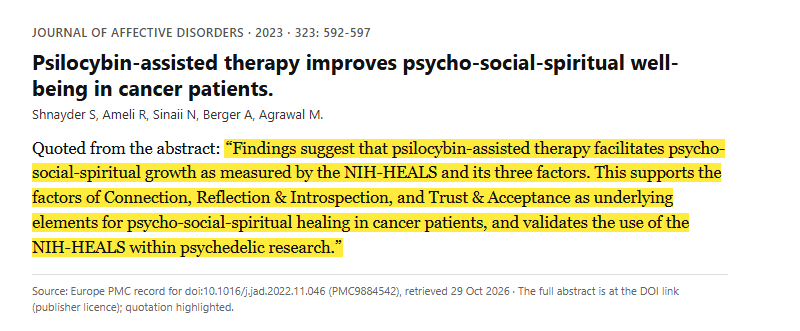
Quotation from the abstract of the published study (text from Europe PMC), highlighted in yellow. Source: Shnayder S, Ameli R, Sinaii N, et al. Psilocybin-assisted therapy improves psycho-social-spiritual well-being in cancer patients. J Affect Disord. 2023;323:592-597. https://doi.org/10.1016/j.jad.2022.11.046
Study 14. Systematic review of psilocybin-assisted therapy for distress in fourteen studies of people with cancer (Lapid, 2025)
Across fourteen studies, psilocybin therapy consistently reduced depression, anxiety and existential distress, with improvements sustained over several months!
This PROSPERO-registered systematic review searched five databases for every randomized, open-label and qualitative study of psilocybin for cancer-related distress. Fourteen studies met the inclusion criteria, including three randomized controlled trials and five open-label trials. Researchers reported that psilocybin therapy consistently showed significant reductions in depression, anxiety and existential distress, with improvements sustained over several months, and highlighted its potential as an effective treatment for psychological and existential distress in cancer patients.
“Fourteen studies met the inclusion criteria, comprising three RCTs, five open-label trials, five qualitative studies, and one single case report. Psilocybin therapy consistently showed significant reductions in depression, anxiety, and existential distress, with improvements sustained over several months.”
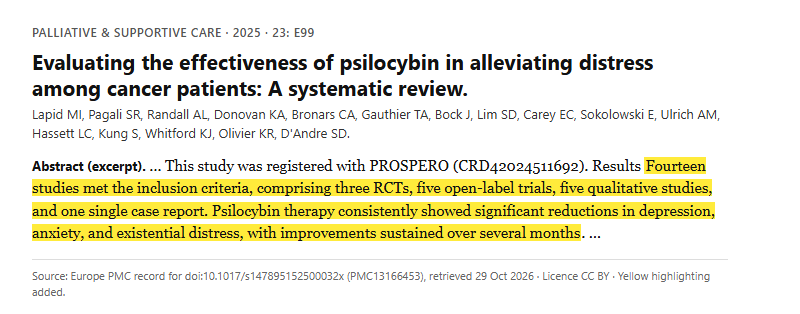
Abstract of the published study (text from Europe PMC), key sentence highlighted in yellow. Source: Lapid MI, Pagali SR, Randall AL, et al. Evaluating the effectiveness of psilocybin in alleviating distress among cancer patients: A systematic review. Palliat Support Care. 2025;23:e99. https://doi.org/10.1017/s147895152500032x
Study 15. Open-label phase 2 trial of psilocybin-assisted group therapy in 30 patients with cancer and major depressive disorder (Agrawal, 2024)
Depression severity scores fell by 19.1 points from baseline to posttreatment!
In this phase 2, open-label trial at a single community oncology practice, thirty participants with curable and noncurable cancer and major depressive disorder completed psilocybin-assisted therapy delivered to cohorts of three to four participants, with one-to-one therapist support. Researchers reported a robust reduction in depression severity scores of 19.1 points from baseline to posttreatment. The authors highlighted that the group-oriented format, compact delivery time and community cancer center setting could add to therapeutic gains and efficiency.
“Efficacy was suggested based on clinically meaningful reductions in depressive symptoms. The novel, group-oriented format, compact delivery time, community cancer center setting, and one-to-one therapist-to-patient ratio could also add to therapeutic gains and efficiency of administration.”
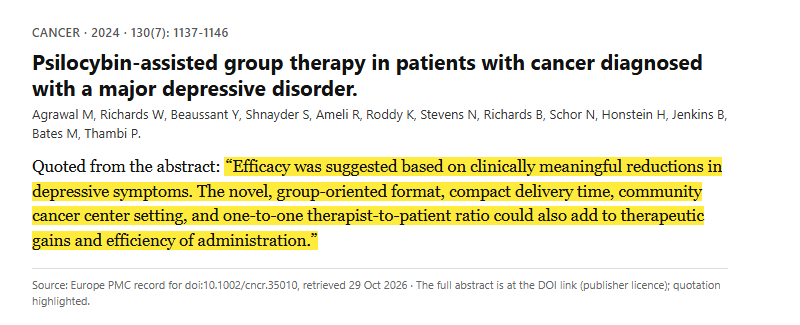
Quotation from the abstract of the published study (text from Europe PMC), highlighted in yellow. Source: Agrawal M, Richards W, Beaussant Y, et al. Psilocybin-assisted group therapy in patients with cancer diagnosed with a major depressive disorder. Cancer. 2024;130(7):1137-1146. https://doi.org/10.1002/cncr.35010
Study 16. Short "burst" ketamine infusions in 39 patients with refractory cancer pain (Jackson, 2001)
67% of refractory cancer pains responded to a short burst of ketamine!
In a prospective, multicenter, open-label audit, 39 patients with a total of 43 refractory cancer pains received a short 3 to 5 day ketamine infusion. Researchers reported an overall response rate of 29/43 (67%), with 15/17 somatic pains and 14/23 neuropathic pains responding. Strikingly, 24 of the 29 responders maintained good pain control afterwards, for up to eight weeks.
“The overall response rate was 29/43 (67%). Analysis of results according to pain mechanisms showed that 15/17 somatic and 14/23 neuropathic pains responded.”
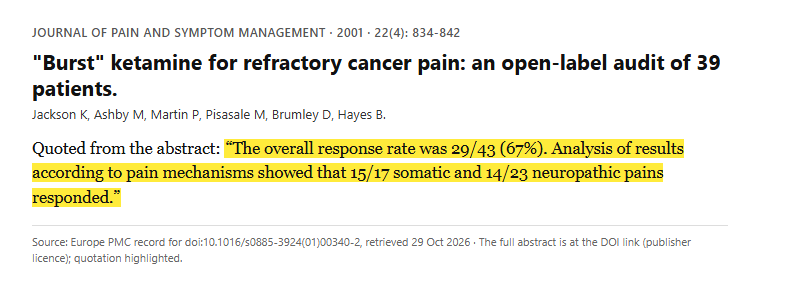
Quotation from the abstract of the published study (text from Europe PMC), highlighted in yellow. Source: Jackson K, Ashby M, Martin P, et al. "Burst" ketamine for refractory cancer pain: an open-label audit of 39 patients. J Pain Symptom Manage. 2001;22(4):834-842. https://doi.org/10.1016/s0885-3924(01)00340-2
Study 17. Double-blind, placebo-controlled pilot study of psilocybin in 12 adults with advanced-stage cancer and anxiety (Grob, 2011)
Trait anxiety fell significantly at 1 and 3 months after psilocybin treatment in adults with advanced-stage cancer!
This double-blind, placebo-controlled study enrolled 12 adults with advanced-stage cancer and anxiety, with each participant acting as their own control, and followed them for 6 months. The State-Trait Anxiety Inventory trait anxiety subscale showed a significant reduction in anxiety at 1 and 3 months after treatment. The Beck Depression Inventory revealed an improvement of mood that reached significance at 6 months.
“The State-Trait Anxiety Inventory trait anxiety subscale demonstrated a significant reduction in anxiety at 1 and 3 months after treatment.”
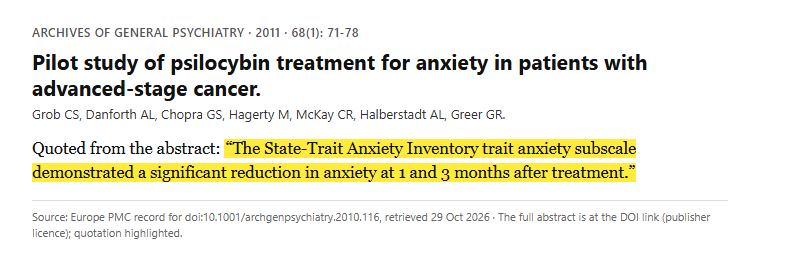
Quotation from the abstract of the published study (text from Europe PMC), highlighted in yellow. Source: Grob CS, Danforth AL, Chopra GS, et al. Pilot study of psilocybin treatment for anxiety in patients with advanced-stage cancer. Arch Gen Psychiatry. 2011;68(1):71-78. https://doi.org/10.1001/archgenpsychiatry.2010.116
Study 18. Oral ketamine added to morphine in 9 cancer patients with intractable neuropathic pain (Kannan, 2002)
Seven of 9 cancer patients with intractable neuropathic pain had their pain score cut by more than 3 points with oral ketamine!
In a prospective study, 9 cancer patients with intractable neuropathic pain scoring above 6 on a 0-10 scale had oral ketamine added to their existing regimen and kept daily pain diaries. A drop of more than 3 points from baseline in the average pain score was defined as a successful response, and researchers reported that seven patients achieved it. The authors concluded that low dose oral ketamine is beneficial and effective in the management of intractable neuropathic pain in patients with advanced cancer.
“A decrease of more than 3 from the baseline in the average pain score, or a score of < or =3 was taken as a successful response. Seven patients exhibited a decrease of more than 3.”
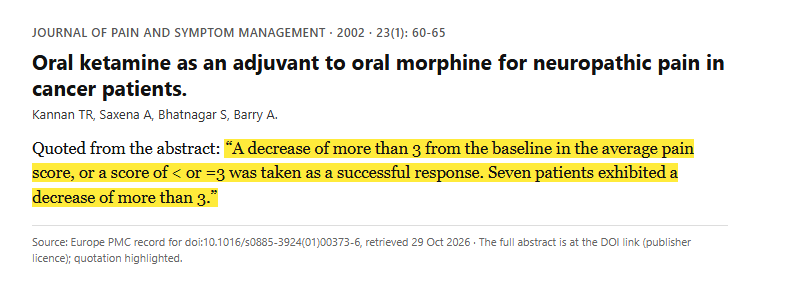
Quotation from the abstract of the published study (text from Europe PMC), highlighted in yellow. Source: Kannan TR, Saxena A, Bhatnagar S, Barry A. Oral ketamine as an adjuvant to oral morphine for neuropathic pain in cancer patients. J Pain Symptom Manage. 2002;23(1):60-65. https://doi.org/10.1016/s0885-3924(01)00373-6
Study 19. Intranasal ketamine for existential distress in 15 patients with advanced cancer in palliative care (Aguiar, 2026)
Quality of life improved with a very large effect size of d = 1.53 after intranasal ketamine in advanced cancer!
This report of secondary outcomes from the open-label INKeD-PC trial analysed 15 participants with advanced cancer receiving palliative care who completed three ketamine treatments. Improvements were observed across all secondary outcome measures, exceeding established minimal clinically important differences: anxiety (d = 1.22), death and dying distress (d = 0.91), symptom burden (d = 1.21) and quality of life (d = 1.53). The existential well-being factor also improved (d = 1.02), and the authors suggested ketamine may have relevance as a single agent for multidimensional distress in palliative care.
“Intranasal ketamine was associated with clinically meaningful improvements in existential distress in individuals with advanced cancer being treated for depression. Ketamine may have relevance as a single agent for multidimensional distress in palliative care.”
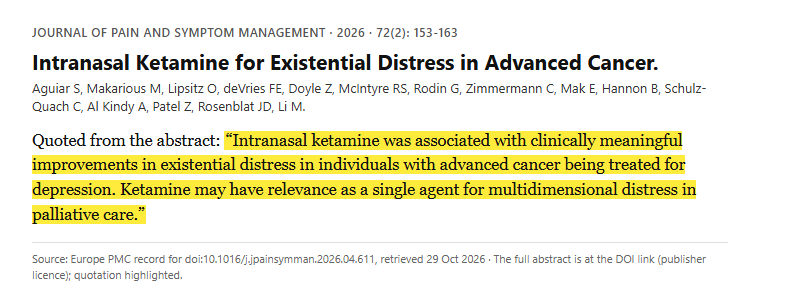
Quotation from the abstract of the published study (text from Europe PMC), highlighted in yellow. Source: Aguiar S, Makarious M, Lipsitz O, et al. Intranasal Ketamine for Existential Distress in Advanced Cancer. J Pain Symptom Manage. 2026;72(2):153-163. https://doi.org/10.1016/j.jpainsymman.2026.04.611
Study 20. Randomized double-blind phase 2 trial of ketamine versus active placebo for oral and pharyngeal mucositis pain in 16 patients (Peechatanan, 2026)
77.8% of patients given ketamine had a clinically meaningful drop in mucositis pain, compared with 14.3% on placebo!
In this prospective, double-blind, randomized phase 2 study, adults with treatment-related oral and pharyngeal mucositis pain inadequately controlled with opioids received a continuous subcutaneous ketamine infusion or an active placebo for 3-5 days. Analysis of 16 patients revealed a significant, clinically meaningful pain reduction in 77.8% of the ketamine group compared with 14.3% in the placebo group. Ketamine also significantly reduced the average pain score (-5.40 vs -0.72), a remarkable result for one of the most distressing pains of cancer treatment.
“Linear mixed method analysis of 16 patients revealed a significant, clinically meaningful pain reduction in 77.8% of the ketamine group compared to 14.3% in the placebo group (P = 0.04).”
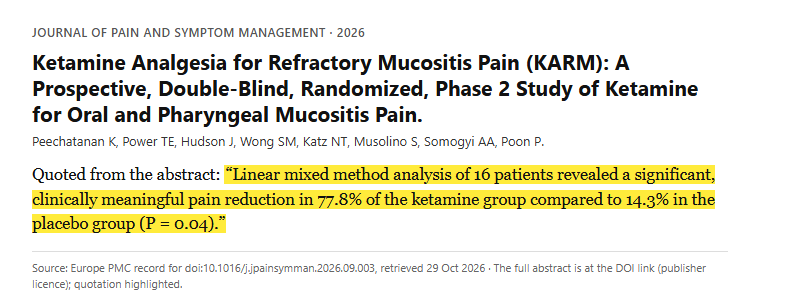
Quotation from the abstract of the published study (text from Europe PMC), highlighted in yellow. Source: Peechatanan K, Power TE, Hudson J, et al. Ketamine Analgesia for Refractory Mucositis Pain (KARM): A Prospective, Double-Blind, Randomized, Phase 2 Study of Ketamine for Oral and Pharyngeal Mucositis Pain. J Pain Symptom Manage. 2026:S0885-3924(26)00970-X. https://doi.org/10.1016/j.jpainsymman.2026.09.003
Study 21. Interviews about psychedelic-assisted therapy for existential distress with fifteen people living with cancer (Schuman, 2025)
Fifteen people living with cancer saw psychedelic-assisted therapy as a way to meaningfully engage with suffering!
Fifteen participants with varying cancer types and stages, recruited from a national survey, took part in semi-structured interviews analysed by reflexive thematic analysis. Participants expressed cautious optimism about psychedelic-assisted therapy, driven by unmet needs in conventional care, particularly after active treatment and at advanced stages of cancer where existential and spiritual concerns often go unaddressed. Psychedelic-assisted therapy was seen as a potential adjunct that could meaningfully engage with suffering beyond symptom management.
“PAT was seen as a potential adjunct that could meaningfully engage with suffering beyond symptom management.”
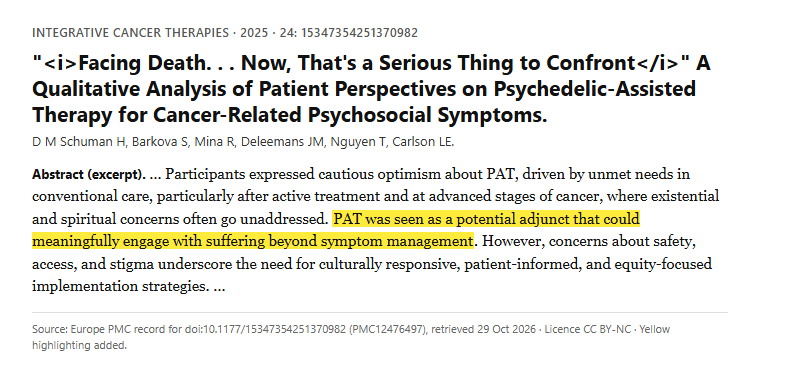
Abstract of the published study (text from Europe PMC), key sentence highlighted in yellow. Source: D M Schuman H, Barkova S, Mina R, et al. "Facing Death. . . Now, That's a Serious Thing to Confront" A Qualitative Analysis of Patient Perspectives on Psychedelic-Assisted Therapy for Cancer-Related Psychosocial Symptoms. Integr Cancer Ther. 2025;24:15347354251370982. https://doi.org/10.1177/15347354251370982
Study 22. Psilocybin-assisted therapy in 30 patients with cancer and depression, with and without active anticancer treatment (Schaefer, 2026)
Depression scores fell substantially at weeks 1, 3 and 8 whether or not patients were receiving active anticancer treatment!
This secondary analysis of a phase 2 trial compared 17 patients receiving systemic anticancer treatment with 13 who were not, all with major depressive disorder and all receiving psilocybin-assisted therapy with individual and group preparation and integration. MADRS depression scores decreased substantially in both groups, with no significant between-group differences at week 1, week 3, or week 8. The authors concluded that antidepressant outcomes were comparable regardless of systemic anticancer treatment status, supporting inclusion of actively treated oncology populations in future trials.
“Among 30 participants (mean [SD] age, 56 [12] years; 21 women [70%]), MADRS scores decreased substantially in both groups, with no significant between-group differences at week 1 (P = .88), week 3 (P = .93), or week 8 (P = .97).”
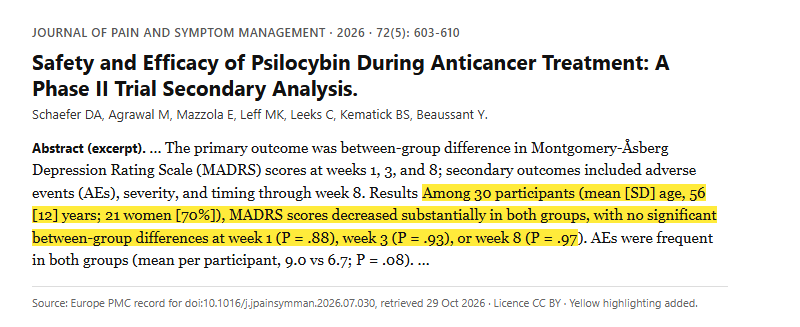
Abstract of the published study (text from Europe PMC), key sentence highlighted in yellow. Source: Schaefer DA, Agrawal M, Mazzola E, et al. Safety and Efficacy of Psilocybin During Anticancer Treatment: A Phase II Trial Secondary Analysis. J Pain Symptom Manage. 2026;72(5):603-610. https://doi.org/10.1016/j.jpainsymman.2026.07.030
Study 23. Exit interviews on psilocybin-assisted group therapy with 28 patients with cancer and major depression (Beaussant, 2024)
28 patients with cancer and depression described psilocybin group therapy as fostering connection, belonging and self-transcendence!
Researchers conducted semi-structured exit interviews with 28 participants of a phase 2 trial of psilocybin-assisted therapy at a community cancer center, which combined simultaneous individual therapy with group sessions. Participants' views were generally positive on both safety and efficacy: the groups increased their sense of preparedness and fostered connection and belonging, deepening the meaning of the experience toward self-transcendence and compassion. The authors concluded the model might enhance perceived efficacy compared with uniquely individual or group formats and could help integrate psilocybin therapy into cancer care.
“Our findings support the acceptability of this intervention and suggest that in addition to being feasible, it might also enhance participants' perceived safety and efficacy compared to uniquely individual or group delivery models of PAT. Our analysis highlights critical factors conditioning acceptability and suggests new ways PAT may be scaled and integrated into cancer care.”
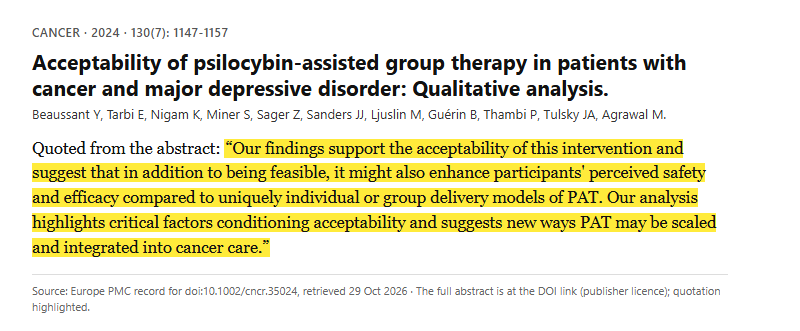
Quotation from the abstract of the published study (text from Europe PMC), highlighted in yellow. Source: Beaussant Y, Tarbi E, Nigam K, et al. Acceptability of psilocybin-assisted group therapy in patients with cancer and major depressive disorder: Qualitative analysis. Cancer. 2024;130(7):1147-1157. https://doi.org/10.1002/cncr.35024
Study 24. Second group retreat psilocybin therapy experience for 13 partial responders with metastatic cancer (Back, 2026)
69% of participants achieved anxiety and depression scores below the clinical threshold!
In this single-arm phase 1 study, thirteen participants with metastatic cancer who had only partially responded to a first group retreat psilocybin therapy experience completed a second one. Mean Hospital Anxiety and Depression Scale scores dropped from 15.08 at baseline to 9.00 at Day +8, with improvements maintained through 24-week follow-up, and 69% achieved scores below the clinical threshold. The proportion with a complete mystical experience rose from 38% to 77%, and social support, social identification, and group cohesion showed progressive improvements that persisted at 24 weeks.
“Mean Hospital Anxiety and Depression Scale (HADS) Total scores decreased from 15.08 (SD 4.35) at baseline to 9.00 (SD 4.62) at Day +8, with improvements maintained through 24-week follow-up (mean 10.42, SD 6.93); 69% achieved HADS scores below the clinical threshold.”
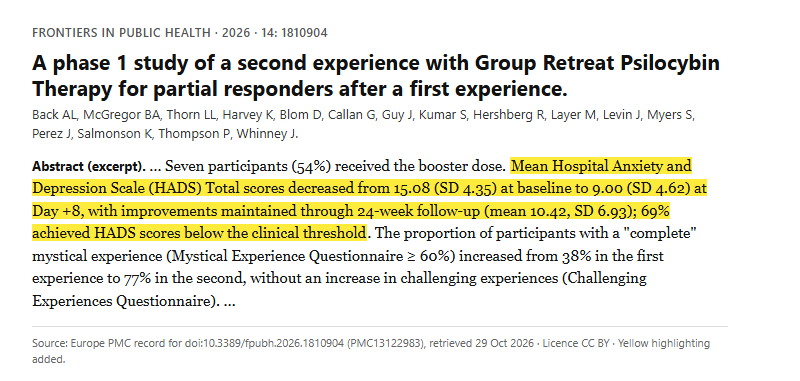
Abstract of the published study (text from Europe PMC), key sentence highlighted in yellow. Source: Back AL, McGregor BA, Thorn LL, et al. A phase 1 study of a second experience with Group Retreat Psilocybin Therapy for partial responders after a first experience. Front Public Health. 2026;14:1810904. https://doi.org/10.3389/fpubh.2026.1810904
Study 25. Systematic review of the therapeutic effects of psilocybin, including three controlled studies in cancer-related distress (Goel, 2022)
Three controlled studies found a single psilocybin treatment may ease cancer-related depression and anxiety for at least six months!
This systematic review examined therapeutic studies of psilocybin across conditions. Researchers reported that, according to three controlled studies, psilocybin may reduce symptoms of depression and anxiety in the context of cancer-related psychological discomfort for at least six months after a single acute treatment. The review also summarised encouraging findings in treatment-resistant depression and addiction.
“According to three controlled studies, psilocybin may reduce symptoms of depression and anxiety in the context of cancer-related psychological discomfort for at least six months after a single acute treatment for mood and anxiety disorders.”
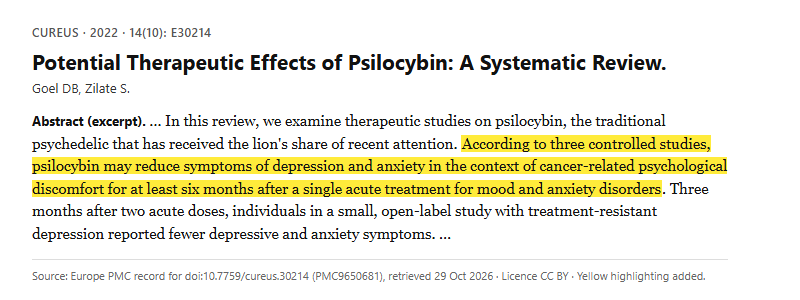
Abstract of the published study (text from Europe PMC), key sentence highlighted in yellow. Source: Goel DB, Zilate S. Potential Therapeutic Effects of Psilocybin: A Systematic Review. Cureus. 2022;14(10):e30214. https://doi.org/10.7759/cureus.30214
Study 26. Phase II trial of continuous intravenous ketamine alongside opioids in 20 terminally ill cancer patients with refractory pain (Park, 2025)
Half of patients (50%) with refractory cancer pain responded to ketamine infusion!
This prospective phase II study analysed 20 hospitalized terminally ill cancer patients whose pain was refractory despite high-dose intravenous opioids, most with a neuropathic component, who received a 5-day continuous intravenous ketamine infusion as an adjuvant. The overall pain response rate was 50%, including 40% with a complete pain response and 10% with a partial response. The authors concluded that ketamine infusion could be a useful tool for these patients given their limited treatment options.
“The overall pain response rate was 50% (n = 10) including 40% (n = 8) for complete pain response and 10% (n = 2) for partial pain response.”
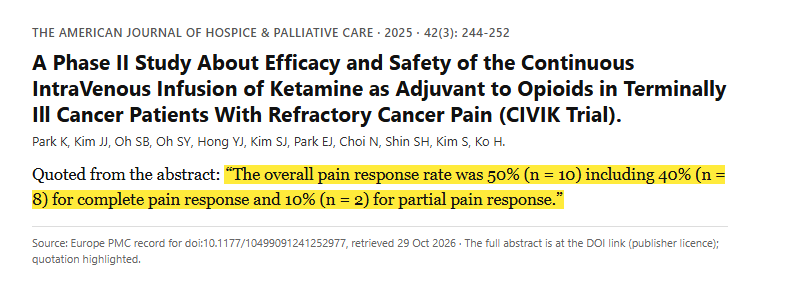
Quotation from the abstract of the published study (text from Europe PMC), highlighted in yellow. Source: Park K, Kim JJ, Oh SB, et al. A Phase II Study About Efficacy and Safety of the Continuous IntraVenous Infusion of Ketamine as Adjuvant to Opioids in Terminally Ill Cancer Patients With Refractory Cancer Pain (CIVIK Trial). Am J Hosp Palliat Care. 2025;42(3):244-252. https://doi.org/10.1177/10499091241252977
Study 27. Qualitative interviews with 13 patients with cancer-related anxiety after psilocybin-assisted psychotherapy (Swift, 2017)
13 patients with cancer described a felt reconnection to life and greater confidence in the face of recurrence after psilocybin therapy!
Researchers conducted semistructured interviews with 13 adults with clinically elevated cancer-related anxiety who had received a single psilocybin session under close clinical supervision, and identified 10 themes using interpretative phenomenological analysis. Participants described reconciliations with death, an acknowledgment of cancer's place in life and emotional uncoupling from cancer. The therapy helped facilitate a reconnection to life, a reclaiming of presence and greater confidence in facing cancer recurrence.
“Participants made spiritual or religious interpretations of their experience, and the psilocybin therapy helped facilitate a felt reconnection to life, a reclaiming of presence, and greater confidence in the face of cancer recurrence.”
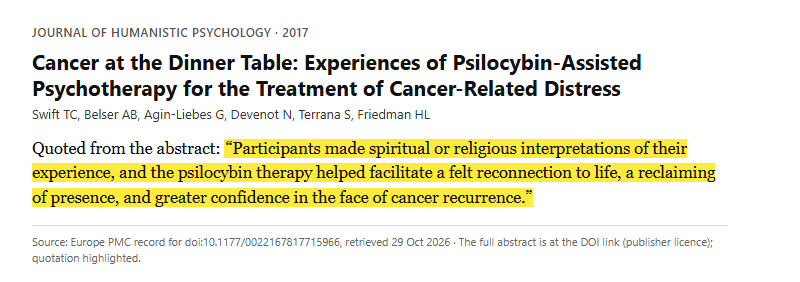
Quotation from the abstract of the published study (text from Europe PMC), highlighted in yellow. Source: Swift TC, Belser AB, Agin-Liebes G, et al. Cancer at the Dinner Table: Experiences of Psilocybin-Assisted Psychotherapy for the Treatment of Cancer-Related Distress. Journal of Humanistic Psychology. 2017. https://doi.org/10.1177/0022167817715966
Study 28. Longitudinal survey of eight Canadians with cancer receiving legal compassionate-access psilocybin-assisted psychotherapy (De la Salle, 2024)
Eight Canadians with cancer given legal access to psilocybin therapy showed significant gains in anxiety, depression, pain and quality of life!
Researchers ran a prospective longitudinal survey of Canadians granted Section 56 exemptions for legal psilocybin-assisted psychotherapy; eight participants, all with cancer diagnoses, completed baseline and two-week endpoint surveys. Significant improvements were observed in anxiety and depression symptoms, pain, fear of COVID-19, quality of life, and spiritual well-being. The authors noted these data are among the first to suggest real-world patients can gain psychiatric benefits akin to those seen in clinical trials.
“Significant improvements in anxiety and depression symptoms, pain, fear of COVID-19, quality of life, and spiritual well-being were observed.”
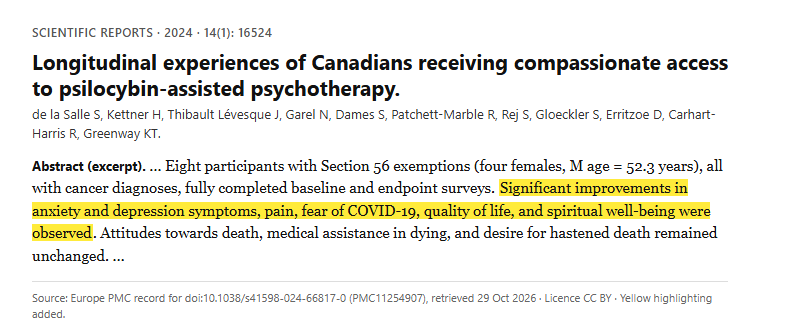
Abstract of the published study (text from Europe PMC), key sentence highlighted in yellow. Source: de la Salle S, Kettner H, Thibault Lévesque J, et al. Longitudinal experiences of Canadians receiving compassionate access to psilocybin-assisted psychotherapy. Sci Rep. 2024;14(1):16524. https://doi.org/10.1038/s41598-024-66817-0
Study 29. Qualitative study of set and setting with 28 patients with cancer and depression in a psilocybin trial (Beaussant, 2025)
28 patients with cancer and depression described how preparation, integration and a supportive setting maximised psilocybin's benefits!
Researchers conducted semi-structured interviews with 28 participants in a clinical trial of psilocybin-assisted therapy for cancer-related depression. Participants tied therapeutic benefit to their ability to surrender to the experience, and described a safe, supportive and ethical environment as critical to trust and engagement. Preparation and integration were key to maximising benefit, and ceremonial elements added meaning for many.
“A safe, supportive, and ethical environment was critical in fostering trust and engagement. Preparation and integration were key to maximizing benefit.”
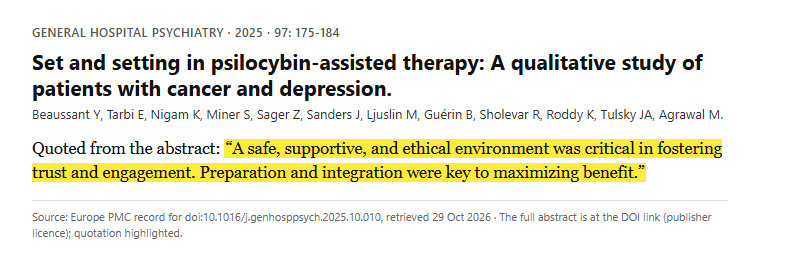
Quotation from the abstract of the published study (text from Europe PMC), highlighted in yellow. Source: Beaussant Y, Tarbi E, Nigam K, et al. Set and setting in psilocybin-assisted therapy: A qualitative study of patients with cancer and depression. Gen Hosp Psychiatry. 2025;97:175-184. https://doi.org/10.1016/j.genhosppsych.2025.10.010
Study 30. Surveys and focus groups with 7 patients with cancer and depression and 6 therapists on meaning-centered psilocybin therapy (Rosa, 2026)
7 patients and 6 therapists helped shape a 5-session meaning-centered psilocybin therapy model for advanced cancer!
Researchers sampled seven patients with cancer and major depression who had received psilocybin therapy followed by group meaning-centered psychotherapy in a phase 2 open-label trial, plus six therapists who delivered it. Through surveys and four focus groups they built a 5-session model, MCP-PSIL. Participants underscored the value of the psilocybin experience, the group and meaning-centered psychotherapy, both separately and together.
“Focus groups underscored the value of experiences related to psilocybin, the group, and MCP, as distinct elements and in conjunction. Participants shared key recommendations to enhance combined psilocybin and MCP experiences and the 5-session MCP-PSIL model.”
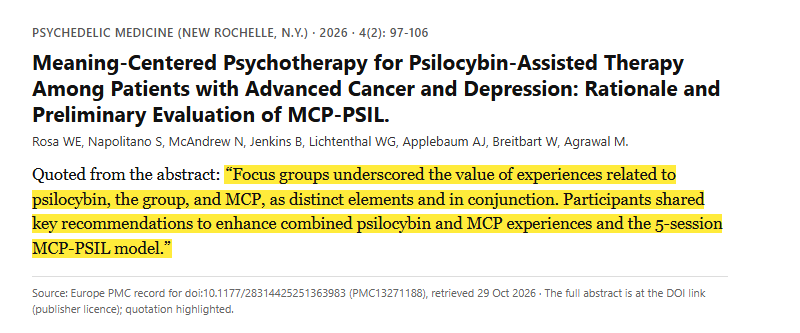
Quotation from the abstract of the published study (text from Europe PMC), highlighted in yellow. Source: Rosa WE, Napolitano S, McAndrew N, et al. Meaning-Centered Psychotherapy for Psilocybin-Assisted Therapy Among Patients with Advanced Cancer and Depression: Rationale and Preliminary Evaluation of MCP-PSIL. Psychedelic Med (New Rochelle). 2026;4(2):97-106. https://doi.org/10.1177/28314425251363983
Related pages on this site
End of Life Distress · Anxiety Disorders · Depressive Disorders · Pain
This page summarizes published research for education only. It is not medical advice. Any change to a medication remains the decision of that person’s own prescriber.
Keep reading
All Educational Resources · About This Archive · For Practicum Supervisors