

Psilocybin is making headlines in headache research! In a placebo-controlled crossover study, weekly migraine days fell by 1.65 after psilocybin versus 0.15 after placebo (p = 0.003). In cluster headache, attacks fell from 18.4 to 9.8 per week, a reduction of approximately 50%, after a repeat psilocybin pulse, and in an open-label trial one person had 21 weeks of complete remission. In interviews with 53 people, 22 of 26 psilocybin users said it aborted their cluster attacks. Encouraging to see careful research continuing, and so much excitement building for people living with headache disorders!
Key studies
Study 1. Psilocybin in 10 people with migraine (Schindler, 2021)
1.65 fewer migraine days per week after psilocybin, versus 0.15 after placebo (p = 0.003)!
In an exploratory double-blind, placebo-controlled crossover study, adults with migraine received placebo and psilocybin in two sessions two weeks apart, and 10 people were included in the final analysis. Researchers reported that weekly migraine days fell by an average of 1.65 after psilocybin versus 0.15 after placebo (p = 0.003), with no unexpected or serious adverse events. The authors said the study suggests an enduring therapeutic effect in migraine after a single administration of psilocybin!
“This exploratory study suggests there is an enduring therapeutic effect in migraine headache after a single administration of psilocybin”
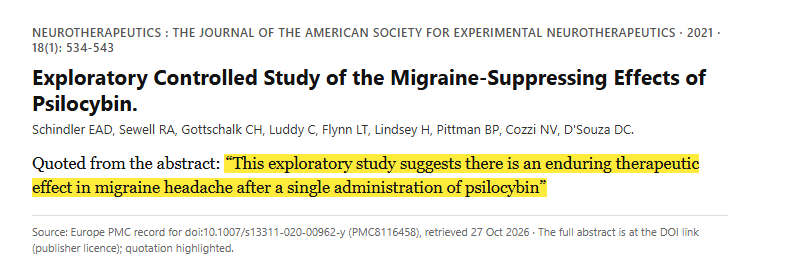
Abstract of the published study (text from Europe PMC), key sentence highlighted in yellow. Source: Study 1. Psilocybin in 10 people with migraine (Schindler, 2021) https://doi.org/10.1007/s13311-020-00962-y
Study 2. Repeat psilocybin pulse in 10 people with cluster headache (Schindler, 2024)
Cluster attacks fell from 18.4 to 9.8 per week, a reduction of approximately 50%, after a repeat psilocybin pulse!
In the blinded extension of a randomized, double-blind, placebo-controlled trial, 10 people with cluster headache returned at least six months later for a repeat psilocybin pulse, keeping headache diaries throughout, and all 10 were included in the final analysis. Researchers reported that cluster attack frequency was significantly reduced from baseline, from 18.4 to 9.8 attacks per week (p = 0.013), with a reduction of approximately 50% seen regardless of how each person had responded in the first round. The authors said the study shows a significant reduction in attack frequency in a repeat round of pulse psilocybin!
“This study shows a significant reduction in cluster attack frequency in a repeat round of pulse psilocybin administration”
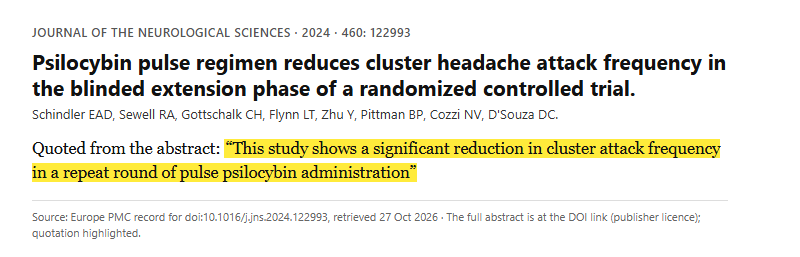
Abstract of the published study (text from Europe PMC), key sentence highlighted in yellow. Source: Study 2. Repeat psilocybin pulse in 10 people with cluster headache (Schindler, 2024) https://doi.org/10.1016/j.jns.2024.122993
Study 3. Psilocybin and LSD reported by 53 people with cluster headache (Sewell, 2006)
22 of 26 psilocybin users with cluster headache reported that it aborted attacks, and 18 of 19 reported longer remission periods!
Researchers interviewed 53 people with cluster headache who had used psilocybin or lysergic acid diethylamide (LSD) to treat their condition. They reported that 22 of 26 psilocybin users said psilocybin aborted attacks; 25 of 48 psilocybin users and 7 of 8 LSD users reported cluster period termination; and 18 of 19 psilocybin users and 4 of 5 LSD users reported remission period extension.
“Twenty-two of 26 psilocybin users reported that psilocybin aborted attacks”
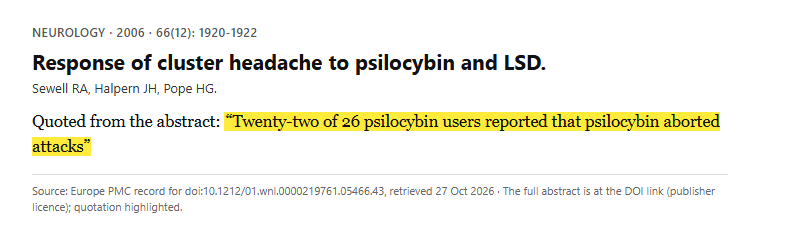
Abstract of the published study (text from Europe PMC), key sentence highlighted in yellow. Source: Study 3. Psilocybin and LSD reported by 53 people with cluster headache (Sewell, 2006) https://doi.org/10.1212/01.wnl.0000219761.05466.43
Study 4. Psilocybin in 10 people with chronic cluster headache (Madsen, 2024)
One person had 21 weeks of complete remission, and attack frequency fell 31% on average after psilocybin!
In a small open-label trial, 10 people with chronic cluster headache kept headache diaries for 10 weeks and received three doses of psilocybin in the middle of that period, with brain scans before and after. Researchers reported that the treatment was well tolerated, that attack frequency fell by an average of 31% from the baseline weeks to the follow-up weeks (p = 0.008), and that one person had 21 weeks of complete remission. They also found that the size of the drop in attacks correlated with changes in connectivity involving the hypothalamus!
“One patient experienced 21 weeks of complete remission.”
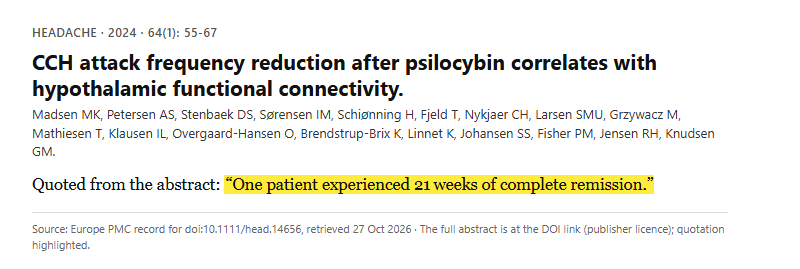
Abstract of the published study (text from Europe PMC), key sentence highlighted in yellow. Source: Study 4. Psilocybin in 10 people with chronic cluster headache (Madsen, 2024) https://doi.org/10.1111/head.14656
Related reading
- Im JJH, Sandoe CH. Psychedelics and Headache Disorders: an Update. Curr Neurol Neurosci Rep. 2025. https://doi.org/10.1007/s11910-025-01446-2 — A recent review concluding that observational data, case reports and a few small controlled trials suggest symptom benefit for both migraine and cluster headache, with generally favorable safety signals.
Related pages on this site
Chronic Pain · Acute Pain · Pain · Fibromyalgia · Physical Well Being · Medication Safety Screening
This page summarizes published research for education only. It is not medical advice. Any change to a medication remains the decision of that person’s own prescriber.
Keep reading
All Educational Resources · About This Archive · For Practicum Supervisors