


Psychedelic research is shining a new light on a good night's sleep! In pooled randomized trials of 63 people with PTSD, sleep quality scores (PSQI) changed by -3.5 points with MDMA-assisted therapy versus 0.6 with control, with further significant gains at 12-month follow-up (Ponte, 2021). In a placebo-controlled trial of 80 healthy men, the LSD group slept an extra 24.3 minutes the night after microdosing, across 3231 nights of tracked sleep (Allen, 2024). Around surgery, esketamine lowered sleep disturbance from 44.0% to 22.8% on the first day in 183 women (Qiu, 2022), and a meta-analysis of 15 trials with 6880 participants found it significantly improved sleep quality (Zhao, 2026). Encouraging to see restful nights becoming a measured outcome!
Key studies
Study 1. MDMA-assisted psychotherapy compared with placebo/control in 63 people with PTSD (Ponte, 2021)
Sleep quality scores (PSQI) changed by -3.5 points with MDMA-assisted therapy versus 0.6 with control!
Researchers pooled four randomized, double-blind studies in which 63 people with PTSD received 2-3 all-day psychotherapy sessions with active MDMA (n = 47) or placebo/control MDMA (n = 16). At the primary endpoint, PTSD severity on the CAPS-IV dropped by 34.0 points after active MDMA compared with 12.4 points after placebo/control, and sleep quality improved far more in the active group (PSQI ΔM = -3.5 vs. 0.6, p = .003). Strikingly, sleep kept getting better after treatment ended, with further significant gains at 12-month follow-up (ΔM = -1.0, p = .030).
“Participants in the active dose group showed more improvement in SQ compared to those in the control group (PSQI total score ΔM = -3.5 vs. 0.6), p = .003. Compared to baseline, SQ had improved at TE, p < .001, with further significant gains reported at 12-month follow-up (TE to 12-months ΔM = -1.0), p = .030.”
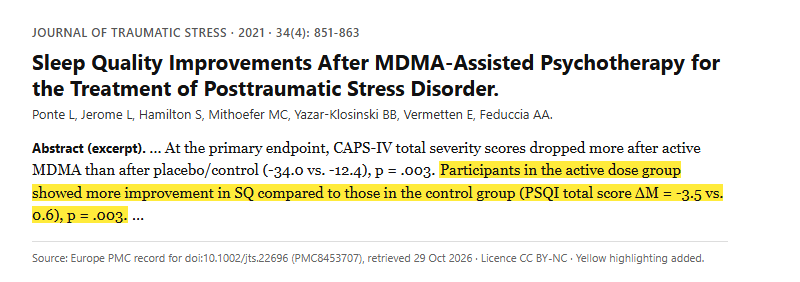
Abstract of the published study (text from Europe PMC), key sentence highlighted in yellow. Source: Ponte L, Jerome L, Hamilton S, et al. Sleep Quality Improvements After MDMA-Assisted Psychotherapy for the Treatment of Posttraumatic Stress Disorder. J Trauma Stress. 2021;34(4):851-863. https://doi.org/10.1002/jts.22696
Study 2. Esketamine during surgery compared with saline placebo in 183 women having gynecological laparoscopy (Qiu, 2022)
Esketamine lowered postoperative sleep disturbance from 44.0% to 22.8% on the first day after surgery!
In this double-blind, placebo-controlled randomized clinical trial, 183 women undergoing gynecological laparoscopic surgery received either an intraoperative esketamine infusion (n = 92) or an equal volume of saline (n = 91). Researchers reported a striking drop in postoperative sleep disturbance with esketamine: 22.8% versus 44.0% on postoperative day 1, and 7.6% versus 19.8% on postoperative day 3. The authors concluded that the trial showed a prophylactic effect of intraoperative esketamine on postoperative sleep disturbance.
“The incidence of PSD in the esketamine group was significantly lower than in the control group on POD 1 (22.8% vs 44.0%; odds ratio [OR], 0.38 [95% CI, 0.20-0.72]; P = .002) and POD 3 (7.6% vs 19.8%; OR, 0.33 [95% CI, 0.13-0.84]; P = .02).”
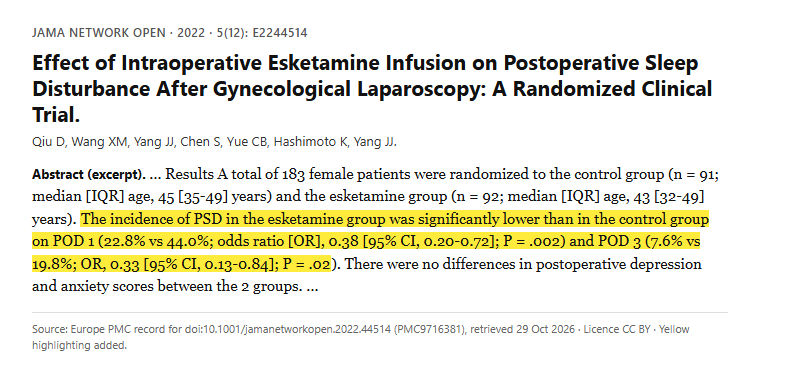
Abstract of the published study (text from Europe PMC), key sentence highlighted in yellow. Source: Qiu D, Wang XM, Yang JJ, et al. Effect of Intraoperative Esketamine Infusion on Postoperative Sleep Disturbance After Gynecological Laparoscopy: A Randomized Clinical Trial. JAMA Netw Open. 2022;5(12):e2244514. https://doi.org/10.1001/jamanetworkopen.2022.44514
Study 3. Meta-analysis of randomized trials of esketamine around surgery in 6880 participants (Zhao, 2026)
Across 15 trials and 6880 participants, esketamine significantly improved sleep quality on the first night after surgery!
Researchers pooled 21 randomized controlled trials comparing esketamine with placebo, standard care or other sedatives, 15 of which (6880 participants) measured postoperative sleep quality. On postoperative day 1, esketamine significantly improved sleep quality (SMD = -0.40). Esketamine also significantly decreased the incidence of postoperative sleep disturbance, reduced pain scores and improved quality of recovery (QoR-15).
“Perioperative esketamine significantly enhances subjective sleep quality, reduces sleep disturbance incidence, and also confers analgesic and recovery benefits.”
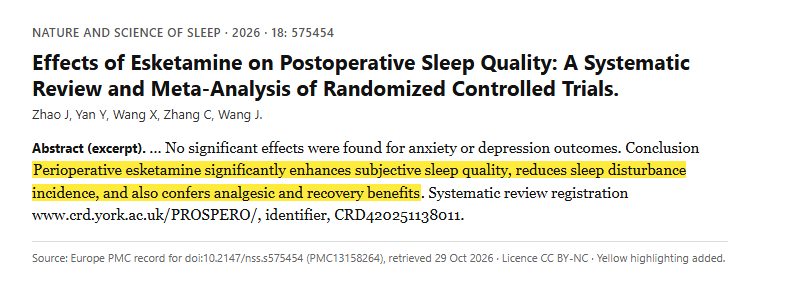
Abstract of the published study (text from Europe PMC), key sentence highlighted in yellow. Source: Zhao J, Yan Y, Wang X, et al. Effects of Esketamine on Postoperative Sleep Quality: A Systematic Review and Meta-Analysis of Randomized Controlled Trials. Nat Sci Sleep. 2026;18:575454. https://doi.org/10.2147/nss.s575454
Study 4. Randomized, double-blind trial of esketamine during surgery versus placebo in 80 patients with sleep disturbance having shoulder arthroscopy (Liu, 2026)
Sleep disturbance after surgery fell to just 5.0% with esketamine, against 27.5% with placebo!
In this randomized, double-blind, placebo-controlled trial, eighty adults with preoperative sleep disturbance received an intraoperative esketamine infusion or placebo during shoulder arthroscopy. Researchers reported a striking difference on the first postoperative day: sleep disturbance occurred in 5.0% of the esketamine group versus 27.5% of the placebo group (risk ratio 0.18). Wearable-derived monitoring on that day also showed a longer device-estimated total sleep time in the esketamine group.
“The incidence of sleep disturbance on POD1 was significantly lower in the esketamine group compared with the placebo group (5.0% vs. 27.5%; risk ratio 0.18, 95% confidence interval 0.04-0.77).”
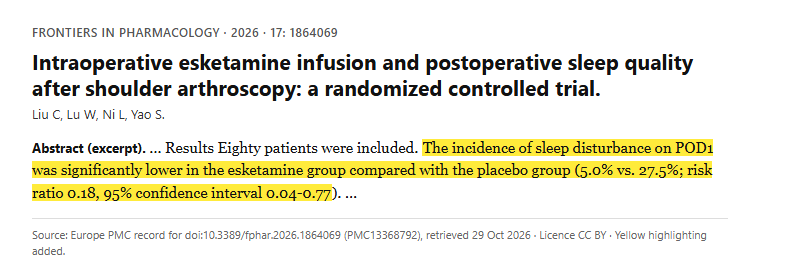
Abstract of the published study (text from Europe PMC), key sentence highlighted in yellow. Source: Liu C, Lu W, Ni L, Yao S. Intraoperative esketamine infusion and postoperative sleep quality after shoulder arthroscopy: a randomized controlled trial. Front Pharmacol. 2026;17:1864069. https://doi.org/10.3389/fphar.2026.1864069
Study 5. Randomized placebo-controlled LSD microdosing with objective sleep tracking in 80 healthy men (Allen, 2024)
Microdosers slept an extra 24.3 minutes the night after LSD compared with placebo!
In a Phase 1 randomized controlled trial, 80 healthy adult male volunteers took either LSD or placebo every third day over a 6-week course while wearing a commercial sleep/activity tracker. Across 3231 nights of sleep, researchers reported that the LSD group slept an extra 24.3 min per night after microdosing compared with placebo, with no reductions of sleep on the dosing day itself. The authors described these as clear, clinically significant changes in objective measurements of sleep that are difficult to explain as a placebo effect.
“Data from 3231 nights of sleep showed that on the night after microdosing, participants in the LSD group slept an extra 24.3 min per night (95% Confidence Interval 10.3-38.3 min) compared to placebo-with no reductions of sleep observed on the dosing day itself.”
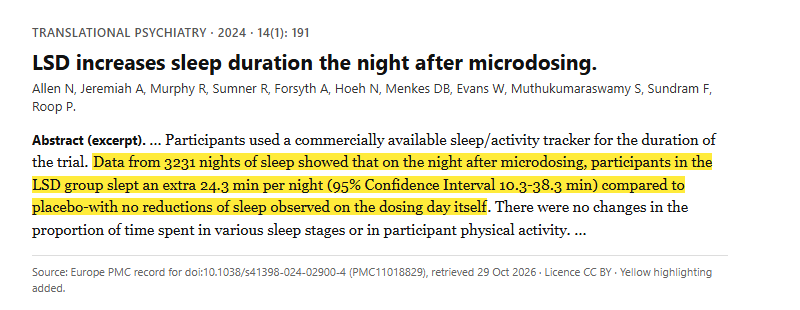
Abstract of the published study (text from Europe PMC), key sentence highlighted in yellow. Source: Allen N, Jeremiah A, Murphy R, et al. LSD increases sleep duration the night after microdosing. Transl Psychiatry. 2024;14(1):191. https://doi.org/10.1038/s41398-024-02900-4
Study 6. Ketamine added to each electroconvulsive therapy session compared with saline in seventy-one patients with depression and sleep disturbance (Dong, 2023)
In a randomized trial of seventy-one patients with depression and disturbed sleep, adding ketamine to ECT improved sleep quality!
In this randomized, controlled trial, seventy-one patients with major depressive disorder and sleep disturbance received bitemporal ECT with either ketamine or saline at each session, with sleep measured on the Chinese Pittsburgh Sleep Quality Index. Patients in the ketamine group needed shorter ECT treatment courses and, by the end of the course, had better sleep efficiency and shorter sleep latency than the saline group. The researchers concluded that ketamine improved sleep quality and enhanced the therapeutic effects of ECT in patients with sleep disturbance.
“Patients in group ES had lower sleep efficiency, longer sleep latency, and required more sleep medication than patients in group KS at the end of the ECT course.”
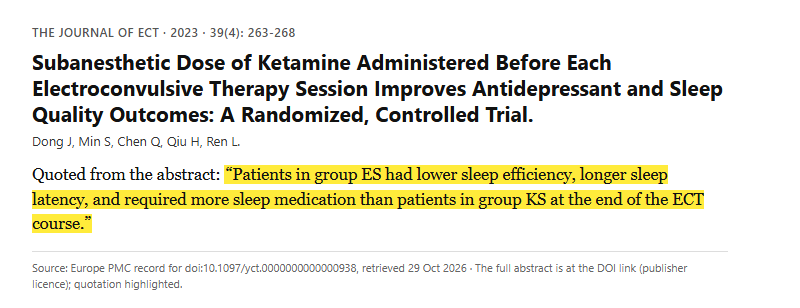
Quotation from the abstract of the published study (text from Europe PMC), highlighted in yellow. Source: Dong J, Min S, Chen Q, et al. Subanesthetic Dose of Ketamine Administered Before Each Electroconvulsive Therapy Session Improves Antidepressant and Sleep Quality Outcomes: A Randomized, Controlled Trial. J ECT. 2023;39(4):263-268. https://doi.org/10.1097/yct.0000000000000938
Study 7. Meta-analysis of twenty-two randomized trials of esketamine for sleep after surgery (Zeng, 2026)
Across twenty-two randomized controlled trials, esketamine reduced sleep disturbance on the second day after surgery, with a risk ratio of just RR = 0.40!
This systematic review and meta-analysis of twenty-two randomized controlled trials compared perioperative esketamine with placebo or non-esketamine controls in adults having surgery under general anesthesia. Esketamine significantly reduced postoperative sleep disturbance on postoperative day 1 (RR = 0.58), day 2 (RR = 0.40) and day 3 (RR = 0.55). Sensitivity analyses and trial sequential analysis supported the robustness of the day 1 and day 3 findings, and the certainty of evidence for early outcomes was rated moderate.
“Twenty-two randomized controlled trials were included. Esketamine significantly reduced PSD incidence on POD1 (RR = 0.58, 95% CI: 0.51-0.66; I 2 = 0%), POD2 (RR = 0.40, 95% CI: 0.28-0.58; I 2 = 0%), and POD3 (RR = 0.55, 95% CI: 0.45-0.68; I 2 = 9%), but not on POD7 (RR = 0.77, 95% CI: 0.55-1.08).”
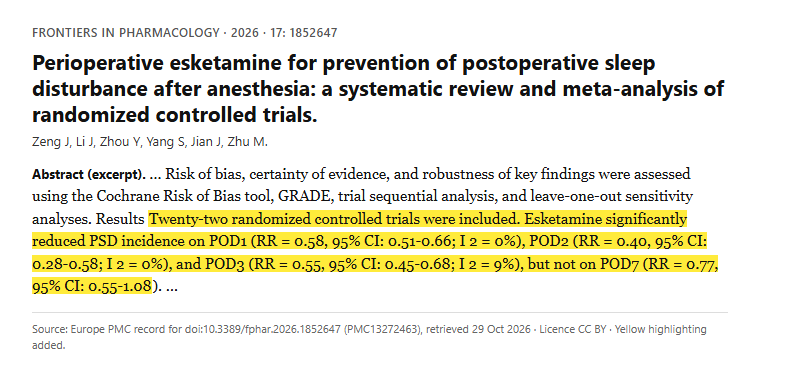
Abstract of the published study (text from Europe PMC), key sentence highlighted in yellow. Source: Zeng J, Li J, Zhou Y, et al. Perioperative esketamine for prevention of postoperative sleep disturbance after anesthesia: a systematic review and meta-analysis of randomized controlled trials. Front Pharmacol. 2026;17:1852647. https://doi.org/10.3389/fphar.2026.1852647
Study 8. Systematic review of ketamine and other glutamatergic modulators on sleep in major depressive disorder (Valentino, 2026)
With about 80% of people with major depression reporting insomnia, ketamine was associated with improvement across several sleep behaviors!
This PRISMA-guided systematic review searched PubMed, Medline, Cochrane Library, PsycInfo, Embase, Scopus and Web of Science from inception to November 27, 2024 for preclinical and clinical studies of glutamatergic modulators and sleep. Researchers reported that clinical studies indicate improved sleep in patients with MDD can mediate ketamine's antidepressant effects. The authors concluded that glutamatergic modulators, primarily ketamine, are associated with improvement across several sleep behaviors in MDD, pointing to sleep mechanisms as promising targets for depression treatment.
“Clinical studies indicate that improved sleep in patients with MDD can mediate ketamine's antidepressant effects.”
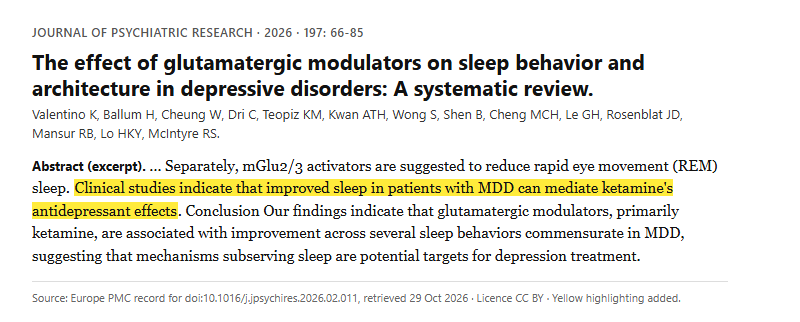
Abstract of the published study (text from Europe PMC), key sentence highlighted in yellow. Source: Valentino K, Ballum H, Cheung W, et al. The effect of glutamatergic modulators on sleep behavior and architecture in depressive disorders: A systematic review. J Psychiatr Res. 2026;197:66-85. https://doi.org/10.1016/j.jpsychires.2026.02.011
Study 9. Six ketamine infusions and sleep in 127 people with major depressive or bipolar disorder (Wang, 2021)
Sleep improvement as early as 24 h after the first ketamine infusion predicted a stronger antidepressant effect in 127 patients!
In this post-hoc analysis, 127 patients with major depressive disorder or bipolar disorder received six ketamine infusions over a 12-day period, with sleep tracked on the HAMD-17 sleep disturbance factor and serum BDNF measured at baseline, day 13 and day 26. Sleep scores improved significantly at each of the 7 post-infusion time points measured, and a greater sleep improvement 24 h after the first infusion led to a better antidepressant effect at the final follow-up visits. Remarkably, sleep responders also had significantly higher BDNF levels than non-responders.
“In the 127 patients, six ketamine infusions induced better therapeutic effects in sleep responders than in sleep non-responders and patients without sleep disturbances. The sleep response after repeated ketamine infusions was positively associated with high serum BDNF levels.”
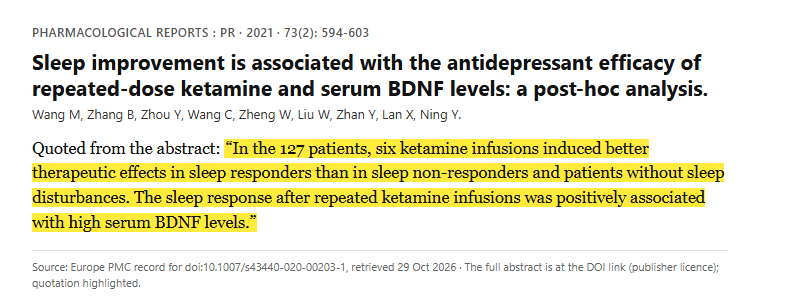
Quotation from the abstract of the published study (text from Europe PMC), highlighted in yellow. Source: Wang M, Zhang B, Zhou Y, et al. Sleep improvement is associated with the antidepressant efficacy of repeated-dose ketamine and serum BDNF levels: a post-hoc analysis. Pharmacol Rep. 2021;73(2):594-603. https://doi.org/10.1007/s43440-020-00203-1
Study 10. Meta-analysis of ketamine around surgery in 2355 patients from 21 randomized trials (Yang, 2025)
Ketamine improved sleep quality scores (MD: -2.90) across the first three days after surgery in 2355 patients!
Researchers analysed 2355 patients from 21 randomized controlled trials of perioperative intravenous ketamine in non-cardiac surgery. Compared with placebo, ketamine improved sleep quality on the first postoperative day, with lower Pittsburgh Sleep Quality Index scores (MD: -2.69), on the second postoperative day (MD: -2.45) and across the first three postoperative days (MD: -2.90). Ketamine also reduced pain scores (MD: -0.38).
“Ketamine also improved sleep quality on the second postoperative day (MD: -2.45; 95% CI: -3.99, -0.91; P = 0.002, I 2 = 96%) and during the first three postoperative days (MD: -2.90; 95% CI: -4.79, -1.00; P = 0.003, I 2 = 97%).”
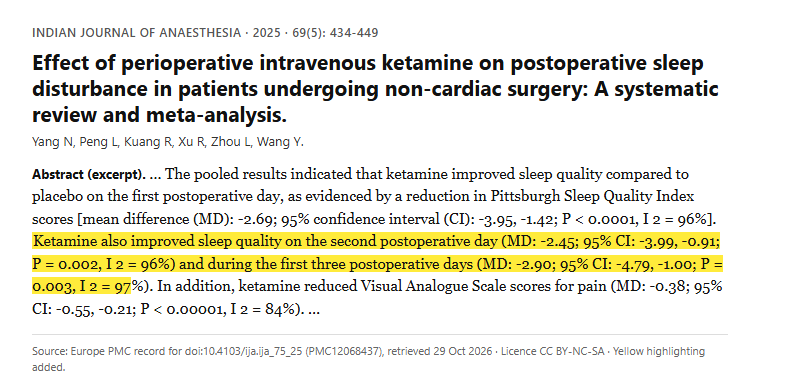
Abstract of the published study (text from Europe PMC), key sentence highlighted in yellow. Source: Yang N, Peng L, Kuang R, et al. Effect of perioperative intravenous ketamine on postoperative sleep disturbance in patients undergoing non-cardiac surgery: A systematic review and meta-analysis. Indian J Anaesth. 2025;69(5):434-449. https://doi.org/10.4103/ija.ija_75_25
Study 11. Daytime ayahuasca compared with placebo and d-amphetamine on night-time sleep in 22 healthy volunteers (Barbanoj, 2008)
Unlike d-amphetamine, ayahuasca enhanced slow-wave sleep power in the first night cycle in 22 healthy volunteers!
In this placebo-controlled study, 22 healthy male volunteers took ayahuasca, placebo or d-amphetamine during the day, and researchers measured that night's sleep with subjective ratings, polysomnography and spectral analysis. Ayahuasca left subjectively perceived sleep quality and sleep initiation and maintenance intact, in contrast with d-amphetamine. Remarkably, while d-amphetamine reduced slow-wave sleep power in the first night cycle, ayahuasca increased it, pointing to an interaction between psychedelics and the brain circuits that modulate REM and slow-wave sleep.
“Remarkably, whereas slow-wave sleep (SWS) power in the first night cycle, an indicator of sleep pressure, was decreased by d-amphetamine, ayahuasca enhanced power in this frequency band.”
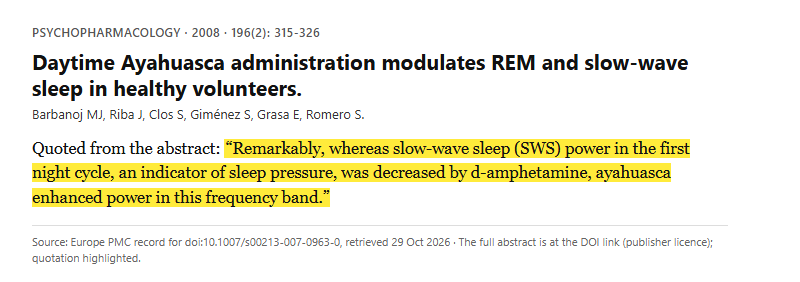
Quotation from the abstract of the published study (text from Europe PMC), highlighted in yellow. Source: Barbanoj MJ, Riba J, Clos S, et al. Daytime Ayahuasca administration modulates REM and slow-wave sleep in healthy volunteers. Psychopharmacology (Berl). 2008;196(2):315-326. https://doi.org/10.1007/s00213-007-0963-0
Study 12. Meta-analysis of esketamine around surgery in 1956 patients from 14 randomized trials (Yang, 2026)
In 14 randomized trials with 1956 patients, esketamine cut the odds of a disturbed first night after surgery (OR = 0.38)!
This systematic review and meta-analysis pooled 14 randomized controlled trials involving 1956 adult surgical patients given intravenous esketamine during the perioperative period. Esketamine significantly reduced the incidence of postoperative sleep disturbance on the first postoperative night (OR = 0.38). Both single-dose and continuous intraoperative esketamine consistently improved postoperative sleep quality, and the need for rescue pain relief was significantly lower in the esketamine group.
“Perioperative esketamine effectively reduces the incidence of early postoperative sleep disturbances and improves subjective sleep quality in adult surgical patients, with the timing of administration being the primary source of heterogeneity.”
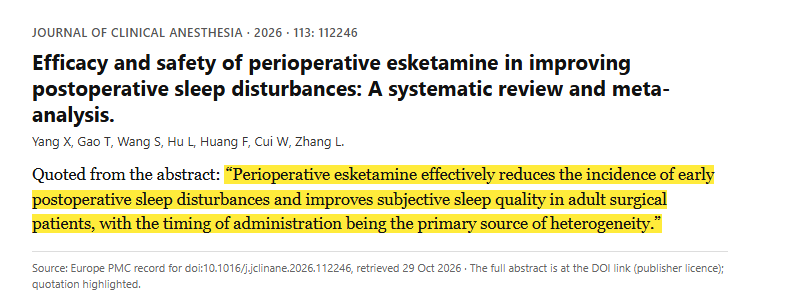
Quotation from the abstract of the published study (text from Europe PMC), highlighted in yellow. Source: Yang X, Gao T, Wang S, et al. Efficacy and safety of perioperative esketamine in improving postoperative sleep disturbances: A systematic review and meta-analysis. J Clin Anesth. 2026;113:112246. https://doi.org/10.1016/j.jclinane.2026.112246
Study 13. Wrist-activity monitoring of circadian rhythms after ketamine in 51 patients with major depressive or bipolar disorder (Duncan, 2017)
In 51 patients, those whose rapid response to ketamine lasted showed a higher circadian amplitude and mesor than nonresponders by day 3!
Researchers used wrist-activity monitors to measure circadian amplitude and timing at baseline, day 1 and day 3 after ketamine in 51 patients with major depressive disorder or bipolar disorder. On day 3, patients whose rapid mood response persisted showed a higher circadian amplitude and mesor than nonresponders. The authors describe these as the first findings to link ketamine's clinical antidepressant effects with circadian timekeeping.
“On D3, patients with a persisting clinical response exhibited a higher amplitude and mesor compared with nonresponders.”
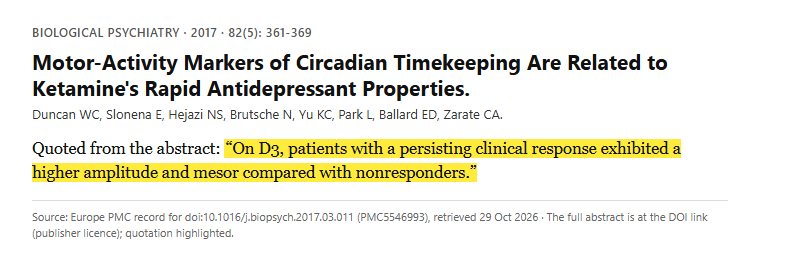
Quotation from the abstract of the published study (text from Europe PMC), highlighted in yellow. Source: Duncan WC, Slonena E, Hejazi NS, et al. Motor-Activity Markers of Circadian Timekeeping Are Related to Ketamine's Rapid Antidepressant Properties. Biol Psychiatry. 2017;82(5):361-369. https://doi.org/10.1016/j.biopsych.2017.03.011
Study 14. Randomized trial of esketamine during surgery in 130 patients with preexisting sleep disorders (Li, 2025)
Sleep disturbance on the first night after surgery fell to 43.1% with esketamine versus 64.6% in controls!
In this randomized trial, 130 patients with preexisting sleep disorders were assigned to intraoperative esketamine or a control group, with sleep measured on the Numerical Rating Scale and Athens Insomnia Scale. On postoperative day 1, the esketamine group showed a significantly lower incidence of postoperative sleep disturbance (43.1 vs. 64.6%; OR, 0.414) and reduced hydromorphone consumption. Researchers also linked oral microbiota profiles to sleep disturbance, pointing to a possible mechanism for the benefit.
“On POD 1, the esketamine group showed a significantly lower incidence of PSD (43.1 vs. 64.6%; OR, 0.414; P = 0.014) and reduced hydromorphone consumption.”
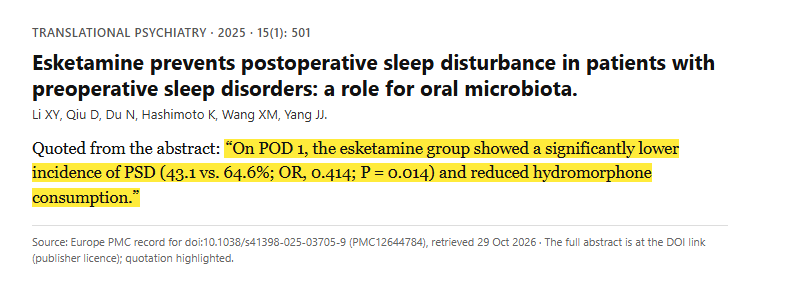
Quotation from the abstract of the published study (text from Europe PMC), highlighted in yellow. Source: Li XY, Qiu D, Du N, et al. Esketamine prevents postoperative sleep disturbance in patients with preoperative sleep disorders: a role for oral microbiota. Transl Psychiatry. 2025;15(1):501. https://doi.org/10.1038/s41398-025-03705-9
Study 15. Randomized trial of esketamine during general surgery in two groups of 75 patients (Zhang, 2025)
Sleep disturbance on the first day after surgery fell to 25.3% with esketamine versus 49.3% without!
In this randomized controlled trial, patients undergoing general surgery under general anesthesia received a continuous intraoperative esketamine infusion or control, with 75 patients in each group. The esketamine group had significantly lower rates of sleep disturbance on postoperative day 1 (19/75 vs. 37/75) and day 3 (14/75 vs. 27/75). Perioperative esketamine also reduced early postoperative pain, and EEG analysis identified a slow-wave activity index, reflecting esketamine-induced prefrontal delta synchronization, as a robust predictor of sleep-disturbance risk.
“Perioperative esketamine administration significantly reduces postoperative sleep disturbance (PSD) incidence and early postoperative pain severity.”
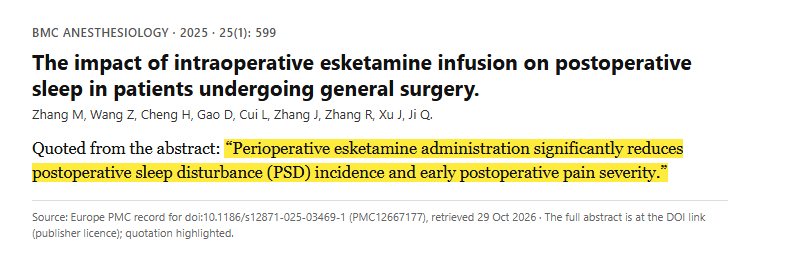
Quotation from the abstract of the published study (text from Europe PMC), highlighted in yellow. Source: Zhang M, Wang Z, Cheng H, et al. The impact of intraoperative esketamine infusion on postoperative sleep in patients undergoing general surgery. BMC Anesthesiol. 2025;25(1):599. https://doi.org/10.1186/s12871-025-03469-1
Study 16. Double-blind placebo-controlled trial of esketamine in eighty-six people having gallbladder surgery (Wu, 2025)
By the second night after surgery, sleep disturbance fell to 11.6% with esketamine versus 44.2% with placebo!
In this double-blinded, placebo-controlled randomized clinical trial, eighty-six patients undergoing laparoscopic cholecystectomy received a continuous intraoperative esketamine infusion (n = 43) or normal saline (n = 43). Postoperative sleep disturbance was significantly lower with esketamine on postoperative day 1 (58.1% vs. 81.4%), day 2 (11.6% vs. 44.2%) and day 3 (2.3% vs. 18.6%). Postoperative pain scores and intraoperative remifentanil consumption were also lower in the esketamine group.
“The incidence of PSD in the esketamine group was significantly lower than in the control group on POD 1 (58.1% vs. 81.4%; odds ratio [OR], 0.32 [95%Cl, 0.12-0.84]; P = 0.019) and POD 2 (11.6% vs. 44.2%; OR, 0.17 [95%Cl, 0.06-0.50]; P = 0.001) and POD3 (2.3% vs. 18.6%; OR, 0.10 [95%Cl, 0.01-0.87]; P = 0.035).”
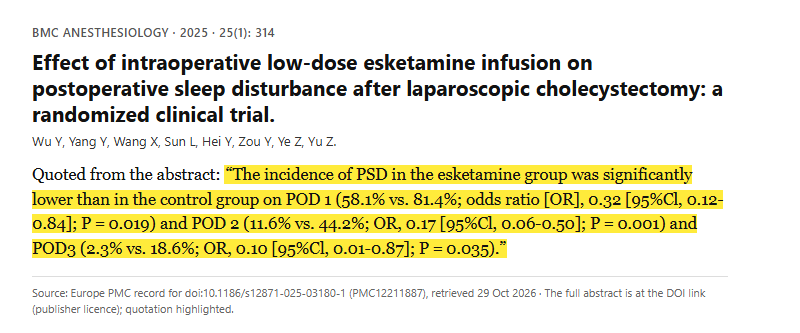
Quotation from the abstract of the published study (text from Europe PMC), highlighted in yellow. Source: Wu Y, Yang Y, Wang X, et al. Effect of intraoperative low-dose esketamine infusion on postoperative sleep disturbance after laparoscopic cholecystectomy: a randomized clinical trial. BMC Anesthesiol. 2025;25(1):314. https://doi.org/10.1186/s12871-025-03180-1
Related pages on this site
PTSD · Microdosing · Acute Pain · Major Depressive Disorder
This page summarizes published research for education only. It is not medical advice. Any change to a medication remains the decision of that person’s own prescriber.
Keep reading
All Educational Resources · About This Archive · For Practicum Supervisors